“All persons shall have full and free liberty of religious opinion; nor shall any be compelled to frequent or maintain any religious institution.”
Quote by Thomas Jefferson
Work
The portable Thomas Jefferson
This volume offers a wide-ranging selection of Thomas Jefferson's writings, showcasing his intellectual contributions across various domains such as politics, philosophy, and personal life. It includes his seminal Declaration of Independence, letters to friends and contemporaries, and his thoughts on issues of the day. The Portable Thomas Jefferson provides insight into Jefferson's character and his influence on American history. more
Author
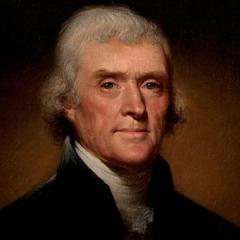
Thomas Jefferson
Thomas Jefferson was the third President of the United States, a distinguished politician, philosopher, architect, and scientist. He was born on April 13, 1743, and died on July 4, 1826. Jefferson advocated for democracy and freedom in politics and was one of the main authors of the Declaration of Independence. His political ideas had a profound impact on the founding and development of the United States. more
You May Also Like
Source: Jefferson on Freedom: Wisdom, Advice, and Hints on Freedom, Democracy, and the American Way
Source: The writings of Thomas Jefferson: being his autobiography, correspondence, reports, messages, addresses, and other writings, official and private
Source: The writings of Thomas Jefferson
Source: The Works of Thomas Jefferson: Correspondence 1771 - 1779, the Summary View, and the Declaration of Independence
Source: The portable Thomas Jefferson
Source: Jefferson: Writings