Quotessence
Home / Quotes / Quote by Edgar Lee Masters

Quote by Edgar Lee Masters

“He stripped off the armor of institutional friendships To dedictate his soul To the terrible deities of Truth and Beauty.”

Quote by Edgar Lee Masters

Author
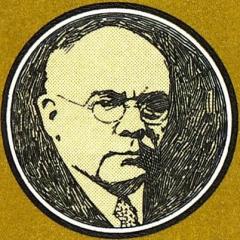
Edgar Lee Masters
Edgar Lee Masters

American poet, born on August 23, 1868, and died on March 5, 1950. His poetry is known for its profound portrayal of ordinary people and unique insights into the life of the American Midwest. more

You May Also Like

“The Romans had, like other Pagan nations, a nature festival, called by them Saturnalia, and the Northern peoples had Yule; both celebrated the turn of the year from the death of winter to the life of spring - the winter solstice. As this was an auspicious change the festival was a very joyous one... The giving of presents and the burning of candles characterized it. Among the Northern people the lighting of a huge log in the houses of the great and with appropriate ceremonies was a feature.”

“An ideology is a complex of ideas or notions which represents itself to the thinker as an absolute truth for the interpretation of the world and his situation within it; it leads the thinker to accomplish an act of self-deception for the purpose of justification, obfuscation and evasion in some sense or other to his advantage.”

“We want to be masters of our own destiny. We need no Gods or Emperors. We do not believe in the existence of any saviour. We want to be masters of the world and not instruments used by autocrats to carry out their wild ambitions. We want a modern lifestyle and democracy for the people. Freedom and happiness are our sole objectives in accomplishing modernisation.”

“There are those who feel an imperative need to believe, for whom the values of a belief are proportionate not to its truth, but to its definiteness. Incapable of either admitting the existence of contrary judgments or of suspending their own, they supply the place of knowledge by turning other men's conjectures into dogmas.”

“I myself am not comfortable with the notion of secularists congregating in groups, except perhaps for defensive purposes: the last thing a secularist should wish to do is to act like a religion, with its rigid hierarchies, its suppression of divergent opinion, and, above all, its ruthless attempts (now mercifully inhibited by laws) to outlaw "heresy" by brute force. Opinions must be changed, one at a time if necessary, but if there are those who wish to persist in religious belief, they should certainly be allowed to do so.”

“The atheist, agnostic, or secularist ... should insist on the need to engage in a meaningful debate on the entire issue of the truth or falsity (or probability or improbability) of religious tenets, without being subject to accusations of impiety, immorality, impoliteness, or any of the other smokescreens used by the pious to deflect attention from the central issues at hand.”