“Modern anthropology ... opposes the utilitarian assumption that the primitive chants as he sows seed because he believes that otherwise it will not grow, the assumption that his economic goal is primary, and his other activities are instrumental to it. The planting and the cultivating are no less important than the finished product. Life is not conceived as a linear progression directed to, and justified by, the achievement of a series of goals; it is a cycle in which ends cannot be isolated, one which cannot be dissected into a series of ends and means.”
Quote by John Carroll
Work
Break-Out from the Crystal Palace: The Anarcho-Psychological Critique: Stirner, Nietzsche, Dostoevsky
This book delves into the philosophical ideas of Stirner, Nietzsche, and Dostoevsky, analyzing their contributions to anarcho-psychology and their impact on modern thought. more
Author
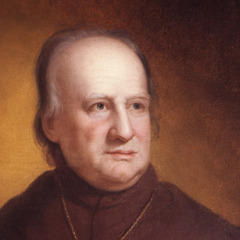
John Carroll
John Carroll (January 8, 1735 - December 3, 1815) was an American religious leader and one of the founding figures of Catholicism in the United States. Born in Ireland, he immigrated to the United States and became the first Archbishop of the United States, playing a significant role in promoting Catholicism and advocating for religious freedom for Catholics in America. more
You May Also Like
Source: Break-Out from the Crystal Palace: The Anarcho-Psychological Critique: Stirner, Nietzsche, Dostoevsky
“Keep your ears open, your eyes open, grab everything you can, react, and learn!”
“If you start to think of your physical and moral condition, you usually find that you are sick.”
Source: Break-Out from the Crystal Palace: The Anarcho-Psychological Critique: Stirner, Nietzsche, Dostoevsky
Source: Break-Out from the Crystal Palace: The Anarcho-Psychological Critique: Stirner, Nietzsche, Dostoevsky
Source: Break-Out from the Crystal Palace: The Anarcho-Psychological Critique: Stirner, Nietzsche, Dostoevsky
Source: Break-Out from the Crystal Palace: The Anarcho-Psychological Critique: Stirner, Nietzsche, Dostoevsky