“What stands most explicitly as critique in Nietzsche's late work in not a development from earlier interests but a return to two problems of enduring personal involvement for him, those of Wagner and of Christianity. Der Antichrist , to take one case, is not a response to a resuscitating public interest in Christian religion; it is primarily a renewed attempt to resolve for himself the question of piety.”
Quote by John Carroll
Author
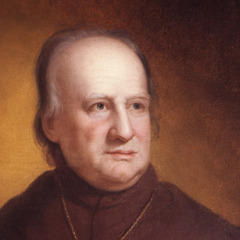
John Carroll
John Carroll (January 8, 1735 - December 3, 1815) was an American religious leader and one of the founding figures of Catholicism in the United States. Born in Ireland, he immigrated to the United States and became the first Archbishop of the United States, playing a significant role in promoting Catholicism and advocating for religious freedom for Catholics in America. more
You May Also Like
Source: Break-Out from the Crystal Palace: The Anarcho-Psychological Critique: Stirner, Nietzsche, Dostoevsky
Source: Break-Out from the Crystal Palace: The Anarcho-Psychological Critique: Stirner, Nietzsche, Dostoevsky
Source: Break-Out from the Crystal Palace: The Anarcho-Psychological Critique: Stirner, Nietzsche, Dostoevsky
Source: Break-Out from the Crystal Palace: The Anarcho-Psychological Critique: Stirner, Nietzsche, Dostoevsky
“The ugliness of the ideological lies in its legitimating the pursuit of the trivial.”
Source: Break-Out from the Crystal Palace: The Anarcho-Psychological Critique: Stirner, Nietzsche, Dostoevsky
Source: Break-Out from the Crystal Palace: The Anarcho-Psychological Critique: Stirner, Nietzsche, Dostoevsky
“We know accurately only when we know little, with knowledge doubt increases.”