Quotessence
Home / Quotes / Quote by Richard Farson

Quote by Richard Farson

“The best ideas aren't hidden in shadowy recesses. They're right in front of us, hidden in plain sight. Innovation seldom depends on discovering obscure or subtle elements but in seeing the obvious with fresh eyes. This is easier said than done because nothing is as hard to see as what's right before our eyes. We overlook what we take for granted. Billions of tea drinkers observed the force of steam escaping from water boiling in a kettle before James Watt realized that this vapor could be converted into energy.”

Quote by Richard Farson

Author
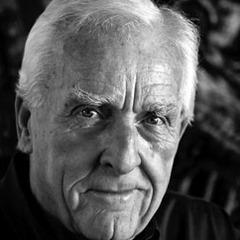
Richard Farson
Richard Farson

Richard Farson was an esteemed psychologist born on November 16, 1926. He had a profound impact in the fields of organizational psychology and leadership, particularly known for his unique insights into leadership. more

You May Also Like

“Winston Churchill said that appetite was the most important thing about education. Leadership guru Warren Bennis says he wants to be remembered as 'curious to the end.' David Ogilvy contends that the greatest ad copywriters are marked by an insatiable curiosity 'about every subject under the sun.'”

“True words aren't eloquent; eloquent words aren't true. Wise men don't need to prove their point; men who need to prove their point aren't wise. The Master has no possessions. The more he does for others, the happier he is. The more he gives to others, the wealthier he is. The Tao nourishes by not forcing. By not dominating, the Master leads.”

“All streams flow to the sea because it is lower than they are. Humility gives it its power. If you want to govern the people, you must place yourself below them. If you want to lead the people, you must learn how to follow them. The Master is above the people, and no one feels oppressed. She goes ahead of the people, and no one feels manipulated. The whole world is grateful to her. Because she competes with no one, no one can compete with her.”

“They have eliminated rigidity, both physical and psychological, in order to support more fluid processes whereby temporary teams are created to deal with specific and ever-changing needs. They have simplified roles into minimal categories; they have knocked down walls and created workplaces where people, ideas, and information circulate freely.”