Quotessence
Home / Quotes / Quote by Justus von Liebig

Quote by Justus von Liebig

“The person who observes a clock, sees in it not only the pendulum swinging to and fro, and the dial-plate, and the hands moving, for a child can see all this; but he sees also the parts of the clock, and in what connexion the suspended weight stands to the wheel-work, and the pendulum to the moving hands.”

Quote by Justus von Liebig

Author
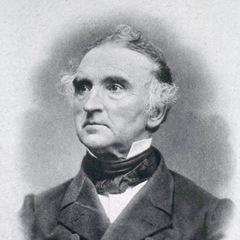
Justus von Liebig
Justus von Liebig

Justus von Liebig, a German chemist born on May 12, 1803, and died on April 18, 1873, is considered one of the founders of organic chemistry. He made significant contributions to the development of agricultural chemistry and food science. more

You May Also Like

“Geology is rapidly taking its place as an introduction to the higher history of man. If the author has sought to exalt a favorite science, it has been with the desire that man-in whom geological history had its consummation, the prophecies of the successive ages their fulfilment-might better comprehend his own nobility and the true purpose of his existence.”

“I would... establish the conviction that Chemistry, as an independent science, offers one of the most powerful means towards the attainment of a higher mental cultivation; that the study of Chemistry is profitable, not only inasmuch as it promotes the material interests of mankind, but also because it furnishes us with insight into those wonders of creation which immediately surround us, and with which our existence, life, and development, are most closely connected.”

“In the case of those solids, whether of earth, or rock, which enclose on all sides and contain crystals, selenites, marcasites, plants and their parts, bones and the shells of animals, and other bodies of this kind which are possessed of a smooth surface, these same bodies had already become hard at the time when the matter of the earth and rock containing them was still fluid. And not only did the earth and rock not produce the bodies contained in them, but they did not even exist as such when those bodies were produced in them.”