Quotessence
Home / Quotes / Quote by Ambrose Bierce

Quote by Ambrose Bierce

“LOGOMACHY, n. A war in which the weapons are words and the wounds punctures in the swim-bladder of self-esteem - a kind of contest in which, the vanquished being unconscious of defeat, the victor is denied the reward of success.”

Quote by Ambrose Bierce

Work

The Unabridged Devil's Dictionary

This book is a compilation of witty and often irreverent definitions, challenging conventional meanings and offering a critical commentary on society and human nature. It is a work of literary wit and social critique, celebrated for its clever wordplay and sharp observations. more

Author
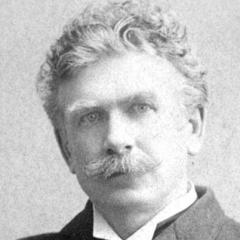
Ambrose Bierce
Ambrose Bierce

Ambrose Bierce was an American journalist, satirist, and editor, renowned for his sharp wit and dark humor. He is best known for his satirical novel 'The Devil's Dictionary' and his short stories. Bierce was born on June 24, 1842, and his exact date of death remains unknown, as he disappeared during the American Civil War. more

You May Also Like

“Soft is the strain when zephyr gently blows, And the smooth stream in smoother numbers flows; But when loud surges lash the sounding shore, The hoarse rough verse should like the torrent roar. When Ajax strives some rock's vast weight to throw, The line too labours, and the words move slow: Not so when swift Camilla scours the plain, Flies o'er th' unbending corn, and skims along the main.”

“In other words, the propositions of philosophy are not factual, but linguistic in character - that is, they do not describe the behaviour of physical, or even mental, objects; they express definitions, or the formal consequences of definitions. Accordingly we may say that philosophy is a department of logic. For we will see that the characteristic mark of a purely logical enquiry, is that it is concerned with the formal consequences of our definitions and not with questions of empirical fact.”

“One of the ways of stopping science would be only to do experiments in the region where you know the law. But experimenters search most diligently, and with the greatest effort, in exactly those places where it seems most likely that we can prove our theories wrong. In other words, we are trying to prove ourselves wrong as quickly as possible, because only in that way can we find progress.”

“Our inheritance of well-founded, slowly conceived codes of honor, morals and manners, the passionate convictions which so many hundreds of millions share together of the principles of freedom and justice, are far more precious to us than anything which scientific discoveries could bestow.”

“A reporter called on Edison to interview him about a substitute for lead in the manufacture of storage batteries that the scientist was seeking. Edison informed the man that he had made 20,000 experiments but none had worked. "Aren't you discouraged by all this waste of effort?" the reporter asked. Edison: "Waste! There's nothing wasted. I have discovered 20,000 things that won't work."”

“Even granting that the genius subjected to the test of critical inspection emerges free from all error, we should consider that everything he has discovered in a given domain is almost nothing in comparison with what is left to be discovered.”

“These long chains of perfectly simple and easy reasonings by means of which geometers are accustomed to carry out their most difficult demonstrations had led me to fancy that everything that can fall under human knowledge forms a similar sequence; and that so long as we avoid accepting as true what is not so, and always preserve the right order of deduction of one thing from another, there can be nothing too remote to be reached in the end, or to well hidden to be discovered.”