Quotessence
Home / Quotes / Quote by Charles Dickens

Quote by Charles Dickens

“Your haughty religious people would have held their heads up to see me as I am tonight, and preached of flames and vengeance,' cried the girl. 'Oh, dear lady, why ar'n't those who claim to be God's own folks as gentle and as kind to us poor wretches as you, who, having youth, and beauty, and all that they have lost, might be a little proud instead of so much humbler?”

Quote by Charles Dickens

Work

Oliver Twist

Oliver Twist is a classic novel that follows the life of an orphan boy born in a workhouse. After daring to ask for more food, Oliver is punished and eventually runs away to London. There, he is taken in by a group of young pickpockets led by the cunning Fagin. The story explores themes of poverty, social injustice, and the struggle between good and evil as Oliver encounters both cruel and compassionate characters, ultimately seeking a place where he belongs. more

Author

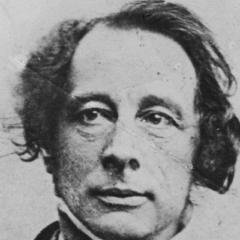
Charles Dickens
Charles Dickens

Charles Dickens, a British writer born on February 7, 1812, and died on June 9, 1870, is one of the greatest novelists of the 19th century. Known for his profound social criticism and vivid narrative style, Dickens' works extensively cover social reality, revealing various issues in the British society of the time. more

You May Also Like

“Vienna was the city of statues. They were as numerous as the people who walked the streets. They stood on the tip of the highest towers, lay down on stone tombs, sat on horseback, kneeled, prayed, fought animals and wars, danced, drank wine and read books made of stone. They adorned cornices like the figureheads of ships. They stood in the heart of fountains glistening with water as if they had just been born. They sat under trees in the parks summer and winter. Some wore costumes of other periods, and some had no clothes at all. Men, women, children, kings, dwarfs, gargoyles, unicorns, lions, clowns, heroes, wise men, prophets, angels, saints and soldiers preserved for Vienna an illusion of eternity.”

“As the nineteenth century progressed, Austria-Hungary took refuge in reaction at home and adventurism abroad in an effort to contain the centrifugal forces which eventually blew it, and much of Europe, apart. Austria, and Vienna in particular, was the real home of Central-European anti-semitism. Jews wew bottom of the pile. No matter how low you sank, the Jews were still below you, along with the gypsies. At the tail-end of the nineteenth century, the Viennese politician Karl Lueger founded his power base on an anti-semitic platform. Stories of ritual murder by Jewish cabals featured regularly in the Viennese gutter press. It is no accident that Schickelgruber, the faied artist who became Hitler, should have neen the son of a petty official and have spent his ambitions at the butt end of Viennese snobbery.”

“This evening : Fischl and Mayreder debated on Secession, Fischl pro and Mayreder contra - primarily against Olbrich. It's all very well to dismiss him, to criticize - but just try doing better yourself dear Mayreder ! It was the fourth time that M. had called on us in the last few days, and we're heartily glad to be rid of him. Nobody misses him, myself least of all. - I wonder if he's still fond of me? He's very taken with the Secessionist painters, being particularly 'enamoured' - as he puts it - of Bacher, Engelhart and Klimt. Of the latter he says he can well understand young ladies falling for him "in a big way". Oh yes, that was fun : while Kuehl, Klimt, Mayreder, Jettel etc. were here, Klimt gave me the idea of shaping my bread into a heart. I did so, then he formed a toothpick into an arrow and plunged it into the heart. He took red wine and made it flow from the would. It looked really good. He gave it to Mayreder as 'my wounded heart'. On reflection, I can see that it was a very brutal joke and I regret it, for at the time Mayreder gave me a look that went straight through me. Incidentally, Klimt knows that M. is fond of me. He noticed - and said as much as well. I didn't deny it.”

“It's strange. When I put something incomprehensible into a picture, it's usually because the form and colour interest me and because it just happens to fit in. Thwn my friends come along : 'What is that suppose to mean _' And they rack their brains for an interpretation, finding so many ingenious explanations that I feel quite proud of all the unarticulated ideas concealed in my pictures." - Fernand Khnopff to Alma Mahler, while walking in the Prater in Vienna, from her diary July 1899”

“For as I looked down to see what sort of people were about, I caught sight of a strange couple. A man of rather advanced years, judging by his back which was turned towards me, dressed in a thin, yellow swanskin jacket, pale blue trousers, heavy shoes and a little round hat, as he walked down the street. He was leading a girl, dressed no less oddly than himself in a brown cope which was draped about her shoulders almost like a toga. But the girl had so large a head, enough to startle anyone, that it kept causing people to stare at it. Both of them went their way at a moderate pace; but both were so clumsy and awkward that it was immediately evident they were not used to Vienna and that they were incapable of behaving like other folk.”