Quotessence
Home / Quotes / Quote by Aristotle

Quote by Aristotle

Work

Ethics: The Nicomachean Ethics

Written by Aristotle, this work delves into the philosophical inquiry of ethics, focusing on the concept of virtue and its role in human flourishing. It is a comprehensive examination of moral principles and the pursuit of eudaimonia, or human excellence. more

Author
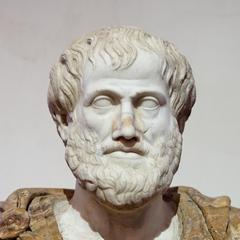
Aristotle
Aristotle

Aristotle, a renowned Greek philosopher, is one of the founders of Western philosophy. His thoughts covered a wide range of fields, including ethics, logic, politics, and had a profound impact on the world. more

You May Also Like

“However destructive may be the policies of the government and the methods and products of the corporations, the root of the problem is always found to be found in private life. We must learn to see that every problem that concerns us as conservationists always leads straight to the question of how we live. The world is being destroyed, no doubt about it, by the greed of the rich and powerful. It is also being destroyed by popular demand.”

“Human beings are themselves considered consumer goods to be used and then discarded. We have created a “disposable” culture which is now spreading. It is no longer simply about exploitation and oppression, but something new. Exclusion ultimately has to do with what it means to be a part of the society in which we live; those excluded are no longer society’s underside or its fringes or its disenfranchised – they are no longer even a part of it. The excluded are not the “exploited” but the outcast, the “leftovers”.”

“In a consumer society, expectations dare not plateau, because a growing economy depends on rising expectations... The more we let our level of contentment be determined by outside factors-a new car, fashionable clothes, a prestigious career, social status-the more we relinquish control over our own happiness.”

“Many of our miseries are merely comparative: we are often made unhappy, not by the presence of any real evil, but by the absence of some fictitious good; of something which is not required by any real want of nature, which has not in itself any power of gratification, and which neither reason nor fancy would have prompted us to wish, did we not see it in the possession of others.”

“Plenty is the original cause of many of our needs; and even the poverty, which is so frequent and distressful in civilized nations, proceeds often from that change of manners which opulence has produced. Nature makes us poor only when we want necessaries; but custom gives the name of poverty to the want of superfluities.”

“Roughly two billion people participate in the money economy, with less than half of those living in the wealthy countries of the developed world. These affluent 800 million, however, account for more than 75 percent of the world's energy and resource consumption, and also create the bulk of its industrial, toxic, and consumer waste.”