“To discover the laws of operative power in material productions, whether formed by man or brought into being by Nature herself, is the work of a science, and is indeed what we more especially term Science.”
Quote by William Whewell
Work
Lectures on the Progress of Arts and Science, Resulting from the Great Exhibition in London ...
This book compiles lectures that explore the impact and outcomes of the Great Exhibition in London, focusing on the progress made in various arts and scientific disciplines. more
Author
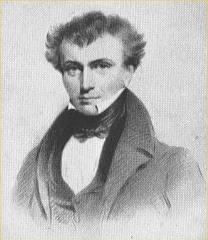
William Whewell
William Whewell was a polymath from England, born on May 24, 1794, and died on March 6, 1866. He made significant contributions to the fields of scientific philosophy, the history of science, logic, mathematics, and astronomy. more
You May Also Like
Source: Opticks, Or a Treatise of the Reflections, Refractions, Inflections and Colours of Light
Source: Isaaci Newtoni Opera quae exstant omnia
“The plough is to the farmer what the wand is to the sorcerer. Its effect is really like sorcery.”
Source: The Papers of Thomas Jefferson: 11 March to 27 November 1813
Source: The Common Sense of Science
Source: Mendeleev on the Periodic Law: Selected Writings, 1869 - 1905
Source: The Physical Basis of Mind: A Symposium
Source: Delphi Complete Works of D.H. Lawrence (Illustrated)
Source: So Great a Vision: The Conservation Writings of George Perkins Marsh