Quotessence
Home / Quotes / Quote by F. Scott Fitzgerald

Quote by F. Scott Fitzgerald

“To have something to say is a question of sleepless nights and worry and endless ratiocination of subject - of endless trying to dig out the essential truth, the essential justice. As a first premise you have to develop a conscience and if on top of that you have talent so much the better. But if you have talent without the conscience, you are just one of many thousands of journalists.”

Quote by F. Scott Fitzgerald

Author
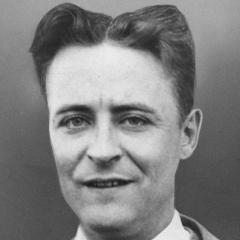
F. Scott Fitzgerald
F. Scott Fitzgerald

F. Scott Fitzgerald was an American author of novels and short stories, renowned for his works that encapsulate the Jazz Age and the Roaring Twenties. His most celebrated novel, 'The Great Gatsby,' is a critical and commercial success, reflecting the themes of the American Dream and the decline of the American upper class. more

You May Also Like

“In regard to the past, where contemplation is not obscured by desire and the need for action, we see, more clearly than in the lives about us, the value for good and evil, of the aims men have pursued and the means they have adopted. It is good, from time to time, to view the present as already past, and to examine what elements it contains that will add to the world's store of permanent possessions, that will live and give life when we and all our generation have perished.”

“My own view, which does not rely solely on religious faith or even on an original idea, but rather on ordinary common sense, is that establishing binding ethical principles is possible when we take as our starting point the observation that we all desire happiness and wish to avoid suffering.”

“The Nazi Party was, in the early 1920s, but one among many nationalist and volkisch radical political groups. It was catapulted to prominence with the onset of economic recession in the late 1920s... The Nazis owed their spectacular to a combination of two discrete sets of factors: first, their distinctive organisation and strategy; and secondly, the wider socio-economic conditions which created climates of opinion and sets of grievances on which the Nazis could prey.”

“The repeated claim before the 'seizure of power' - that the NSDAP, as a national social-revolutionary movement, and not simply another political party... would create new bonds of unity through its elimination and transcending of the party system, was highly attractive and conveyed much of Nazism's dynamic appeal.”