“When we consider the close connection between science and industrial development on the one hand, and between literary and aesthetic cultivation and an aristocratic social organization on the other, we get light on the opposition between technical scientific studies and refining literary studies. We have before us the need of overcoming this separation in education if society is to be truly democratic.”
Quote by John Dewey
Work
Democracy And Education
This seminal work delves into the intersection of democracy and education, examining how democratic principles can influence and be influenced by educational institutions and curricula. The author critically analyzes the historical and contemporary aspects of democratic education, offering insights into the development of democratic societies through education. more
Author
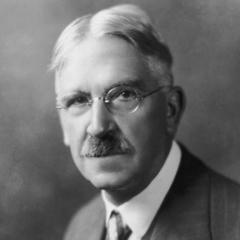
John Dewey
John Dewey was an American philosopher and educator, born on October 20, 1859, and died on June 1, 1952. He was a leading figure in the philosophy of pragmatism and had a profound impact on 20th-century education, philosophy, and the social sciences. more
You May Also Like
“It is a familiar and significant saying that a problem well put is half-solved.”
Source: The Later Works, 1925-1953: 1938
Source: The Later Works, 1925-1953: 1938-1939
“Democracy means the belief that humanistic culture should prevail.”
Source: The Later Works, 1925-1953: 1938-1939
Source: Democracy and Education: Top American Authors
Source: Democracy and Education: Top American Authors
Source: Democracy And Education
Source: Democracy And Education
Source: Democracy And Education