“It is as absurd to expect members of philosophy departments to be philosophers as it is to expect members of art departments to be artists.”
Quote by Leo Strauss
Work
An Introduction to Political Philosophy: Ten Essays
This book offers an in-depth exploration of various essays that delve into the core ideas and historical developments within the field of political philosophy. It provides readers with a broad understanding of the discipline, covering a range of topics and perspectives. more
Author
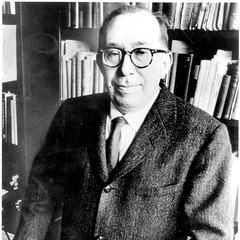
Leo Strauss
Leo Strauss was a prominent philosopher born on September 20, 1899, and died on October 18, 1973. His thoughts were deeply influenced by classical philosophy and German philosophy, especially by Martin Heidegger's philosophical ideas. Strauss's main contribution lies in his reinterpretation of political philosophy, emphasizing the close connection between political philosophy and moral philosophy. more
You May Also Like
Source: Studies in Platonic Political Philosophy
Source: Persecution and the Art of Writing
Source: Natural Right and History
“Philosophizing means, then, to ascend from public dogma to essentially private knowledge.”
Source: An Introduction to Political Philosophy: Ten Essays
Source: Natural Right and History
Source: Natural Right and History