“Almighty God hath created the mind free. All attempts to influence it by temporal punishments or burthens...are a departure from the plan of the holy Author of our religion...No man shall be compelled to frequent or support religious worship or ministry or shall otherwise suffer on account of his religious opinions or belief, but all men shall be free to profess and by argument to maintain, their opinions in matters of religion. I know but one code of morality for men whether acting singly or collectively.”
Quote by Thomas Jefferson
Work
Thomas Jefferson: His Words and Vision
This book presents a comprehensive selection of Thomas Jefferson's letters, speeches, and essays, offering insight into his philosophical and political beliefs, as well as his contributions to the founding of the United States. more
Author
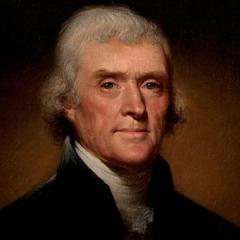
Thomas Jefferson
Thomas Jefferson was the third President of the United States, a distinguished politician, philosopher, architect, and scientist. He was born on April 13, 1743, and died on July 4, 1826. Jefferson advocated for democracy and freedom in politics and was one of the main authors of the Declaration of Independence. His political ideas had a profound impact on the founding and development of the United States. more
You May Also Like
Source: The Essential Jefferson
“I view great cities as pestilential to the morals, the health, and the liberties of man.”
Source: Jefferson: Political Writings
“Some other natural rights... [have] not yet entered into any declaration of rights.”
“Man [is] a rational animal, endowed by nature with rights and with an innate sense of justice.”
Source: Memoir, correspondence, and miscellanies from the papers of T. Jefferson
Source: The writings of Thomas Jefferson: being his autobiography, correspondence, reports, messages, addresses, and other writings, official and private
“That liberty [is pure] which is to go to all, and not to the few or the rich alone.”
“The Giver of life gave it for happiness and not for wretchedness.”
Source: The life and letters of Thomas Jefferson: being his autobiography and select correspondence, from original manuscripts