“Sometimes it made him [Degas] furious that he could not find a chink in my armor, and there would be months when we just could not see each other, and then something I painted would bring us together again.”
Quote by Mary Cassatt
Work
Mary Cassatt, modern woman
Mary Cassatt, modern woman delves into the artistic evolution of Mary Cassatt, highlighting her significant role in the development of modern art. The book examines her paintings, etchings, and pastels, analyzing her unique style and the themes of motherhood, family life, and the female experience. It also discusses Cassatt's relationships with her contemporaries and her influence on the art world. more
Author
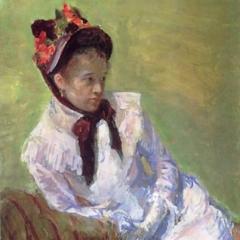
Mary Cassatt
Mary Cassatt was an American painter known for her paintings that depicted the relationship between mothers and children. Born on May 22, 1844, and died on June 14, 1926, Cassatt spent most of her artistic career in France, where she was closely associated with the Impressionist movement, although her style was distinct and emphasized detail and emotional expression. more
You May Also Like
Source: Cassatt
“There are two ways for a painter: the broad and easy one or the narrow and hard one.”
Source: The Paintings of Mary Cassatt: A Benefit Exhibition for the Development of the National Collection of Fine Arts, Smithsonian Institution, Washington, D.C., February 1 Through 26, 1966
“An artist's job is to articulate what might otherwise be incoherent.”
“Take the Money and Run? Can Political and Socio-Critical Art ‘Survive’?”