Quotessence
Home / Quotes / Quote by Patricia Hampl

Quote by Patricia Hampl

“In description we hear and feel the absorption of the author in the material. We sense the presence of the creator of the scene. .. This personal absorption is what we mean by 'style.' It is strange that we would choose so oddly surfacey a word - style - for this most soulful aspect of writing. We could, perhaps more exactly, call this relation between consciousness and its subject 'integrity.' What else is the articulation of perception?”

Quote by Patricia Hampl

Author
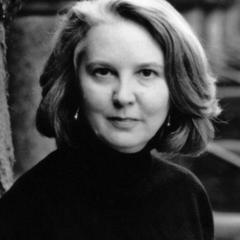
Patricia Hampl
Patricia Hampl

Patricia Hampl is a renowned American memoirist, born on March 12, 1946. Her works are known for their profound personal perspective and exploration of memory, which have won her a wide readership. more

You May Also Like

“At the outset, it is only liking, not understanding, that matters. Gaps in understanding ... are not only important, they are perhaps even welcome, like clearings in the woods, the better to allow the heart's rays to stream out without obstacle. The unlit shadows should remain obscure, which is the very condition of enchantment.”

“A statue of Apollo in a museum does not seem naked, but attach a tie to its neck and it will strike us as indecent ... The text is one of the components of an artistic work, albeit an extremely important component ... But the artistic effect as a whole arises from comparisons of the text with a complex set of ontological and ideological esthetic ideas.”

“The poet's discourse can be compared to the track of a charged particle through a cloud-chamber. An energised field of association and connotation, of overtones and undertones, of rebus and homophone, surround its motion, and break from it in the context of collision .. in Western poetry so much of the charged substance is previous poetry.”

“Stopgaps do belong to the internal economy of the form, since the Whole requires them, even if only in a subordinate position ... The stopgap Luigi Paryson's 'zeppa' accepts its own banality, because without the speed that the banal allows up, it would slow up a passage that is crucial for the outcome of the work and its interpretation.”