“One would appear ridiculous who would say, that it is only probable the sun will rise to-morrow, or that all men must die; thoughit is plain we have no further assurance of these facts than what experience affords us.”
Quote by David Hume
Work
The Philosophy of David Hume
This book delves into the intellectual contributions of David Hume, focusing on his theories in epistemology, metaphysics, ethics, and philosophy of religion. It examines Hume's influential skepticism and empiricism, as well as his discussions on human nature and the problem of causation. more
Author
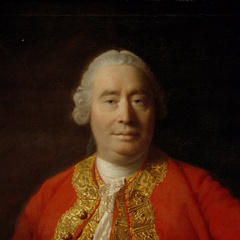
David Hume
David Hume, born on May 7, 1711, in Edinburgh, Scotland, and died on August 25, 1776, was an outstanding philosopher, historian, and economist. Known for his contributions to empiricism and skepticism, his works have had a profound impact on subsequent philosophy, economics, and psychology. more
You May Also Like
Source: An Enquiry Concerning Human Understanding ; [with] A Letter from a Gentleman to His Friend in Edinburgh ; [and] An Abstract of a Treatise of Human Nature
Source: An Enquiry Concerning the Human Understanding: And An Enquiry Concerning the Principles of Morals
Source: A Dissertation on the Passions: The Natural History of Religion : a Critical Edition
Source: Essays and Treatises on Several Subjects
Source: Essays Moral, Political, and Literary
Source: A Treatise of Human Nature
Source: The Philosophical Works of David Hume ... Containing Dialogues Concerning Natural Religion, Essays on the Immortality of the Soul, Suicide ... &c. A New Edition
Source: Delphi Complete Works of David Hume (Illustrated)
Source: A Treatise of Human Nature: Top Philosophy Collections