Quotessence
Home / Quotes / Quote by George Washington

Quote by George Washington

Work

The Quotable George Washington: The Wisdom of an American Patriot

The Quotable George Washington is a collection of quotes from the first President of the United States, George Washington. It aims to showcase his wisdom, leadership, and patriotism through his words. The quotes are drawn from various periods of his life, including his military service, presidency, and personal correspondence. The book serves as a testament to Washington's enduring influence on American history and governance. more

Author
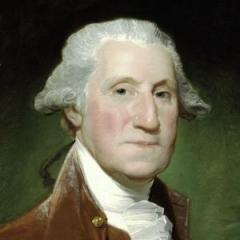
George Washington
George Washington

George Washington was the first President of the United States and a key figure in the American Revolutionary War. Born on February 22, 1732, and died on December 14, 1799, Washington is known for his strong leadership and belief in democracy, playing a crucial role in American history. more

You May Also Like

“It is all the more necessary under a system of free government that the people should be enlightened, that they should be correctly informed, than it is under an absolute government that they should be ignorant. Under a republic the institutions of learning, while bound by the constitution and laws, are in no way subservient to the government.”

“The basis of our governments being the opinion of the people, the very first object should be to keep that right; and were it left to me to decide whether we should have a government without newspapers or newspapers without a government, I should not hesitate a moment to prefer the latter. But I should mean that every man should receive those papers and be capable of reading them.”

“There are two subjects, indeed, which I shall claim a right to further as long as I breathe: the public education, and the sub-division of counties into wards. I consider the continuance of republican government as absolutely hanging on these two hooks.”

“It is impossible to read the history of the petty republics of Greece and Italy without feeling sensations of horror and disgust at the distractions with which they were continually agitated, and at the rapid succession of revolutions by which they were kept in a state of perpetual vibration between the extremes of tyranny and anarchy . . . great improvement . . . were either not known at all, or imperfectly known to the ancients.”

“Congress shall have Power . . . to promote the Progress of Science and useful Arts, by securing for limited Time to Authors and Inventors the exclusive Right to their respective Writings and Discoveries.”

“To instruct the mass of our citizens in these, their rights, interests and duties, as men and citizens...this brings us to the point at which are to commence the higher branches of education . . . . To develop the reasoning faculties of our youth, enlarge their minds, cultivate their morals, and instill into them the precepts of virtue and order.”