Quotessence
Home / Quotes / Quote by Mary Wollstonecraft

Quote by Mary Wollstonecraft

“I have reverentially lifted up my eyes to Him who liveth for ever and ever, and said, O my Father, hast Thou by the very constitution of her nature forbid Thy child to seek Thee in the fair forms of truth? And, can her soul be sullied by the knowledge that awfully calls her to Thee?”

Quote by Mary Wollstonecraft

Work

A Vindication of the Rights of Woman

Written by Mary Wollstonecraft, this book is a passionate plea for the education and rights of women, advocating for their equality in society and challenging the traditional roles assigned to them. more

Author
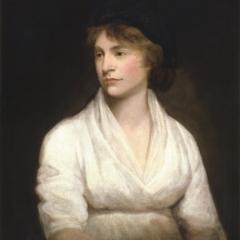
Mary Wollstonecraft
Mary Wollstonecraft

Mary Wollstonecraft, born on April 27, 1759, and died on September 10, 1797, was an influential English writer, philosopher, and feminist. She is best known for her work 'A Vindication of the Rights of Woman', which challenged the gender roles and social structures of her time. more

You May Also Like

“A scarce, artificial and belated phenomenon, love can only blossom under certain mental conditions, rarely conjoined, and totally opposed to the freedom of morals which characterizes the modern era. Véronique had known too many discothèques, too many lovers; such a way of life impoverishes a human being, inflicting sometimes serious and always irreversible damage. Love as a kind of innocence and as a capacity for illusion, as an aptitude for epitomizing the whole of the other sex in a single loved being rarely resists a year of sexual immorality, and never two. In reality the successive sexual experiences accumulated during adolescence undermine and rapidly destroy all possibility of projection of an emotional and romantic sort; progressively, and in fact extremely quickly, one becomes as capable of love as an old slag. And so one leads, obviously, a slag’s life; in ageing one becomes less seductive, and on that account bitter. One is jealous of the young, and so one hates them. Condemned to remain unavowable, this hatred festers and becomes increasingly fervent; then it dies down and fades away, just as everything fades away. All that remains is resentment and disgust, sickness and the anticipation of death.”

“The Thousand and One Nights" draws on a sea of pre-existing legends, from lands stretching from Egypt to China. But the name “Shahrazad” is Persian, and as folklorist Maria Tatar explains, the material she conveys “made its way from Persian to Arabic manuscripts in the second half of the eighth century CE.” Reportedly, Shahrazad has a library of a thousand books, knows all their stories, and weaves them together like a classic bard. The tyrant who reportedly commands her love while threatening her life is a typical ancient warlord, who assumes that mercy is weakness. In countering his murderous egotism, she wields the power of myth and the beauty of empathy. Azar Nafisi explains it as a kind art therapy: “the heroine … must rely on ‘woman’s guile’ to survive a madman’s clutches. She turns his nights with her into an unfolding drama, spinning a spell of fantasy that finally restores his sanity.” In her survey of female heroes throughout history, "The Heroine with 1,001 Faces" (2021), Maria Tatar describes this sort of spell-casting as a chief characteristic of women’s art: “it gradually dawned on me that the heroines [of most folk stories] were habitually bent on social missions, trying to rescue, restore, or fix things, with words as their only weapons,” Maybe that is the ultimate function of all these legendary Persian “romances,” and the main goal of women’s popular folklore through the centuries.”

“A moment’s reflection shows that women, their work, their concerns and innovations are at the core of this more accurate understanding of civilization. As we saw in earlier chapters, tracing the place of women in societies without writing often means using clues left, quite literally, in the fabric of material culture, such as painted ceramics that mimic both textile designs and female bodies in their forms and elaborate decorative structures. To take just two examples, it’s hard to believe that the kind of complex mathematical knowledge displayed in early Mesopotamian cuneiform documents or in the layout of Peru’s Chavín temples sprang fully formed from the mind of a male scribe or sculptor, like Athena from the head of Zeus. Far more likely, these represent knowledge accumulated in earlier times through concrete practices such as the solid geometry and applied calculus of weaving or beadwork. What until now has passed for ‘civilization’ might in fact be nothing more than a gendered appropriation – by men, etching their claims in stone – of some earlier system of knowledge that had women at its centre.”

“Woe is the natural end of life, yet we go on having babies.No, said Nanny, an echo in Melena's mind (and editorializing as usual): No, no, you pretty little pampered hussy. We don't go on having babies, that's quite apparent. We only have babies when we're young enough not to know how grim life turns out. Once we really get the full measure of it--we're slow learners, we women--we dry up in disgust and sensibly halt production.But men don't dry up, Melena objected; they can father to the death.Ah, we're slow learners, Nanny countered. But they can't learn at all.”

“"This is why you shouldn't fall in love, it blinds you. Love is wicked distraction [...] The wickedness of men is that their power breeds stupidity and blindness," [Elphaba] said."And of women?""Women are weaker, but their weakness is full of cunning and an equally rigid moral certainty. Since their arena is smaller, their capacity for real damage is less alarming. Though being more intimate they are the more treacherous."”

“Tribal mothers always tell their children that there are two kinds of anger: hot and cold. Boys and girls experience both, but as they grow up the angers separate according to the sex. Boys need hot anger to survive. They need the inclination to fight, the drive to sink the knife into the flesh, the energy and initiative of fury. It's a requirement of hunting, of defense, of pride. Maybe of sex, too. [...] And girls need cold anger. They need the cold simmer, the ceaseless grudge, the talent to avoid forgiveness, the sidestepping of compromise. They need to know when they say something that they will never back down, ever, ever. It's the compensation for a more limited scope in the world. Cross a man and you struggle, one of you wins, you adjust and go on--or you lie there dead. Cross a woman and the universe is changed, once again, for cold anger requires an eternal vigilance in all manners of slight and offense.”