Quotessence
Home / Quotes / Quote by Conan O'Brien

Quote by Conan O'Brien

Work

The World's Worst Assistant

Browse quotes and source details for this work. more

Author
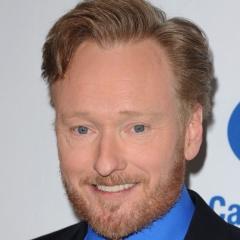
Conan O'Brien
Conan O'Brien

Conan O'Brien, born on April 18, 1963, is a renowned talk show host from the United States. Known for his unique sense of humor and engaging interaction with audiences, he has hosted several popular talk show programs. more

You May Also Like

“There were a lot of botched kills throughout the eastern part of Kentucky when the work fell outside his control. Six or seven years ago, a man from Perry County was shot point blank in the head and left for dead in the middle of downtown. Problem was, the bullet had traveled between the man's scalp and his skull halfway across his head and exited the same way it had entered on the other side. The whole thing had left him with only fingernail-sized contusions on both sides of his head. He identified the guy who shot him and saw him arrested and convicted of attempted murder. Now, it's true that a situation like that was a rare one, but part of doing a job right was minimizing the chance for something to go wrong.”

“I haven't heard anything new that I've liked on the show. A lot of the bands we play with are just bad, especially those alternative rock bands. They can do it in the studio but they can't play live... I see the audience applauding while they're playing, and I wonder if it's just because they're fans of the band and don't care, or out of spite. Because it certainly isn't because they sound good. Branford Marsalis on the musical acts booked on The Tonight Show.”

“In mid-1986, Letterman got an unexpected call from Dave Tebet, the Carson Productions executive who worked with “Late Night.” Tebet said that he and Henry Bushkin, Johnny Carson’s extremely powerful attorney, business partner, and author of his 2013 tell-all, wanted to meet with Letterman—by himself, totally confidentially. Letterman was stunned when he heard what they had come to propose: They were offering him the “Tonight ” show; they wanted him to take Johnny Carson’s job. Bushkin, in his role as head of Carson Productions, said that the company intended to maintain ownership of the “Tonight ” show after Johnny stepped down, and now was the time to line up Letterman to slip into Johnny’s chair. The details were vague, and to Letterman they sounded deliberately so. He said he was flattered, he listened politely, but his radar was signaling a warning. Neither man told Letterman how or when this ascension would be accomplished, a problem that started sounding even worse when Bushkin advised Letterman that no one at NBC or anywhere else knew of the plan yet—not even Carson. Letterman, already nervous, now started to feel as if he were getting close to a fire he didn’t want to be in the same campground with. They asked Letterman not to tell anyone, not even his management. They would get back to him. The more Letterman thought about it, the more it sounded like a palace coup. His immediate instinct was to stay out of this, because there was going to be warfare of some sort. He feared Carson would interpret this maneuver as plotting and he guessed what might happen next: Johnny’s best friend Bushkin wouldn’t take the fall. Nor would his old crony, Tebet. It would be the punk who got blamed for engineering this. Letterman broke his promise and called Peter Lassally, Carson’s producer. Lassally was shocked by what he heard. He suspected that Bushkin was involved in all sorts of machinations that never benefited Carson. He thought about telling Johnny, but other attempts to alert the star to questionable activities by Bushkin had been harshly rebuffed. Lassally decided to see what developed and advised Dave to keep Bushkin and Tebet at a distance. Letterman had a couple of more phone calls from Bushkin and Tebet about the deal; they discussed it with Ron Ellberger, the Indianapolis attorney that Letterman still employed. Tebet blamed the lawyer for muddying up the deal, and eventually said that Carson knew of the plan and had approved of the idea of lining up Letterman for the future. But Tebet was lying; Carson had never heard a word about it, and when he did—long after the approach had taken place and Bushkin and Tebet were both long gone—Carson exploded with rage at the thought that this plotting had gone on behind his back. He knew exactly what he would have done if he had learned of it at the time: He would have fired Bushkin and Tebet before another day elapsed. Letterman had guessed right in steering clear of the coup. When he learned that Carson hadn’t known what was going on, Letterman was deeply thankful for his cautious instincts. When the offer from Bushkin melted away, Letterman tried not to give it any second thoughts. Only for the briefest time did he think that he might have walked away from an offer to host the “Tonight” show. The next time, it would not be nearly so easy to take.”

“Brain, Heart and Empty Pocket (Hopeless Sonnet) Hope is rather important to me, so much so, I even named a title Esperanza Impossible. But my hope is not that of wishful inaction, my hope is a furnace of valiance untamable. It's more important to be the hope and help, than have the hope that help is on the way. No one is too helpless to lift themselves, all you need is a purpose to define your way. If this son of a factory worker could conquer the world with brain, heart and empty pocket, why do you succumb to fictitious despair, the greatest hopes are always hopeless! Rise, revolt and be the hope, take no defeat as your destiny. Till your world bathes in your light, be the hopeless warrior of incorruptibility.”