Quotessence
Home / Quotes / Quote by Georg Wilhelm Friedrich Hegel

Quote by Georg Wilhelm Friedrich Hegel

“Quite generally, the familiar, just because it is familiar, is not cognitively understood. The commonest way in which we deceive either ourselves or others about understanding is by assuming something as familiar, and accepting it on that account; with all its pros and cons, such knowing never gets anywhere, and it knows not why.... The analysis of an idea, as it used to be carried out, was, in fact, nothing else than ridding it of the form in which it had become familiar.”

Quote by Georg Wilhelm Friedrich Hegel

Author
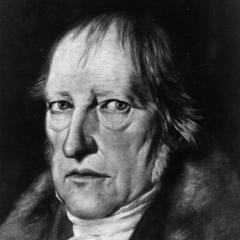
Georg Wilhelm Friedrich Hegel

German philosopher, one of the most important representatives of German classical philosophy. Hegel's philosophical system has had a profound impact on the world. Hegel believed that the task of philosophy is to reveal the absolute spirit, emphasizing the importance of reason, history, and dialectics. more

You May Also Like

“The True is the whole. But the whole is nothing other than the essence consummating itself through its development. Of the Absolute it must be said that it is essentially a result, that only in the end is it what it truly is; and that precisely in this consists its nature, viz. to be actual, subject, the spontaneous becoming of itself.”

“In the case of all other sciences, arts, skills, and crafts, everyone is convinced that a complex and laborious programme of learning and practice is necessary for competence. Yet when it comes to philosophy, there seems to be a currently prevailing prejudice to the effect that, although not everyone who has eyes and fingers, and is given leather and last, is at once in a position to make shoes, everyone nevertheless immediately understands how to philosophize.”

“Since philosophy is the exploration of the rational, it is for that very reason the apprehension of the present and the actual, not the erection of a beyond, supposed to exist, God knows where, or rather which exists, and we can perfectly well say where, namely in the error of a one-sided, empty, ratiocination.”

“The sole work and deed of universal freedom is therefore death, a death too which has no inner significance or filling, for what is negated is the empty point of the absolutely free self. It is thus the coldest and meanest of all deaths, with no more significance than cutting off a head of cabbage or swallowing a mouthful of water.”