Quotessence
Home / Quotes / Quote by Robert Green Ingersoll

Quote by Robert Green Ingersoll

Work

The Gods, and Other Lectures

This book compiles a series of lectures that delve into the study of gods and religious concepts across different cultures and time periods. more

Author
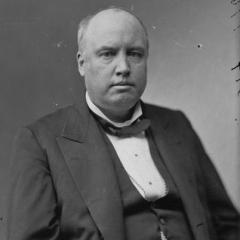
Robert Green Ingersoll

Robert Green Ingersoll was a prominent lawyer, orator, and freethinker. Born on August 11, 1833, and died on July 21, 1899, he was one of the most celebrated orators in 19th-century America. Known for his criticism of religion and government, Ingersoll was a leading advocate for individual freedom. more

You May Also Like

“The Romans had, like other Pagan nations, a nature festival, called by them Saturnalia, and the Northern peoples had Yule; both celebrated the turn of the year from the death of winter to the life of spring - the winter solstice. As this was an auspicious change the festival was a very joyous one... The giving of presents and the burning of candles characterized it. Among the Northern people the lighting of a huge log in the houses of the great and with appropriate ceremonies was a feature.”

“An ideology is a complex of ideas or notions which represents itself to the thinker as an absolute truth for the interpretation of the world and his situation within it; it leads the thinker to accomplish an act of self-deception for the purpose of justification, obfuscation and evasion in some sense or other to his advantage.”

“We want to be masters of our own destiny. We need no Gods or Emperors. We do not believe in the existence of any saviour. We want to be masters of the world and not instruments used by autocrats to carry out their wild ambitions. We want a modern lifestyle and democracy for the people. Freedom and happiness are our sole objectives in accomplishing modernisation.”

“There are those who feel an imperative need to believe, for whom the values of a belief are proportionate not to its truth, but to its definiteness. Incapable of either admitting the existence of contrary judgments or of suspending their own, they supply the place of knowledge by turning other men's conjectures into dogmas.”