Quotessence
Home / Quotes / Quote by Stefan Zweig

Quote by Stefan Zweig

“States of profound happiness, like all other forms of intoxication, are apt to befuddle the wits; intense enjoyment of the present always makes one forget the past.”

Quote by Stefan Zweig

Author
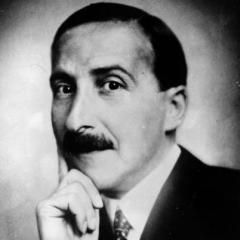
Stefan Zweig
Stefan Zweig

Stefan Zweig, born on November 28, 1881 in Vienna, was an Austrian novelist, playwright, and biographer. Known for his profound psychological insights and unique narrative style, he is a significant figure in European literature at the beginning of the 20th century. more

You May Also Like

“In my youth and comparative inexperience I had always regarded the yearning and pangs of love as the worst torture that could afflict the human heart. At this moment, however, I began to realize that there was another and perhaps grimmer torture than that of longing and desiring: that of being loved against one's will and of being unable to defend oneself against the urgency of another's passion; of seeing another human being seared by the flame of her desire and of having to look impotently, lacking the power, the capacity, the strength to pluck her from the flames.”

“He who is himself crossed in love is able from time to time to master his passion, for he is not the creature but the creator of his own misery; and if a lover is unable to control his passion, he at least knows that he is himself to blame for his sufferings. But he who is loved without reciprocating that love is lost beyond redemption, for it is not in his power to set a limit to that other's passion, to keep it within bounds, and the strongest will is reduced to impotence in the face of another's desire.”

“One thing I hate about the New Deal is that it is killing what, to me, is the American pioneering spirit. I simply do not know what to tell my own boys, leaving school and confronting this new world whose ideal is Security and whose practice is dependence upon government instead of upon one's self. All the old character-values seem simply insane from a practical point of view; the self-reliant, the independent, the courageous man is penalized from every direction.”

“Two deep human desires were at war ... the longing for stability, for form, for permanence, which in its essence is the desire for death, and the opposing hunger for movement, change, instability and risk, which are life. Men came from the east and built these American towns because they wished to go no farther, and the towns they built were shaped by the urge to go onward.”