Quotessence
Home / Quotes / Quote by John Ruskin

Quote by John Ruskin

“In our whole life melody the music is broken off here and there by rests, and we foolishly think we have come to the end of time. God sends a time of forced leisure, a time of sickness and disappointed plans, and makes a sudden pause in the hymns of our lives, and we lament that our voice must be silent and our part missing in the music which ever goes up to the ear of our Creator. Not without design does God write the music of our lives. Be it ours to learn the time and not be dismayed at the rests. If we look up, God will beat the time for us.”

Quote by John Ruskin

Author
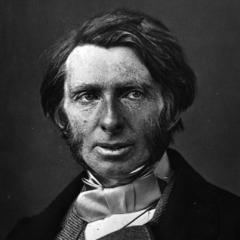
John Ruskin
John Ruskin

John Ruskin was an influential British art critic, writer, and social critic. Known for his profound insights into art, architecture, and social issues, he had a significant impact on the aesthetics and culture of the Victorian era. more

You May Also Like

“There are many who want me to tell them of secret ways of becoming perfect and I can only tell them that the sole secret is a hearty love of God, and the only way of attaining that love is by loving. You learn to speak by speaking, to study by studying, to run by running, to work by working; and just so you learn to love God and man by loving. Begin as a mere apprentice and the very power of love will lead you on to become a master of the art.”

“When I awaken in the morning, I am thankful for a new day. I am thankful for everything that I have materially. I am thankful for everything I have spiritually. I thank God for allowing me to experience these things, even the experiences that may not seem so positive, such as developing an illness. I may not understand why I have the illness, but I sense that it is there for a purpose, and so I thank God for it. I ask Him to allow me to expand beyond my narrow-mindedness and self-centeredness so that I can see the good that comes from everything.”

“Clark, what in your honest opinion is the right standard for determining conduct? Is the only right standard for everyone, the probable action of Jesus Christ? Would you say that the highest, best law for a man to live by was contained in asking the question 'What would Jesus do?' And then doing it regardless of results? In other words, do you think men everywhere ought to follow Jesus' example as closely as they can in their daily lives?”

“And so one may be without connection with any church, and even without connection with any established religion, and yet be in spirit, hence in reality, a much truer Christian than hosts of those who profess to be His most ardent followers, as indeed Jesus Himself so many times says. "By their fruits ye shall know them," said He. "Not every one that saith unto me, Lord, Lord, shall enter into the kingdom of heaven; but he that doeth the will of my Father which is in heaven."”

“We have endless books about whether Jesus existed, or whether the Jesus we have learned about is really accurate and historical or mythical. We have endless complicated tracts on fine technical issues, but we don't explore Jesus' way to happiness and peace, or try to understand his feelings about God and creation of how he views our relationship with God, or his attitude toward human weakness. Understanding these things could help us immensely in our own search for inner peace and a meaning to life.”

“It is worthwhile to liveand fight courageouslyfor sacred ideals.O blow ye evil windsinto my body's firemy soul you'll never unravel.Even though disappointed a thousand timesor fallen in the fightand everything would worthless seem,I have lived amidst eternity -Be grateful, my soul -My life was worth living.He who was pressed from all sidesbut remained victorious in spiritis welcomed into the choir of heroes.He who overcame the fettersgiving wings to his mindis entering into the golden age ofthe victorious.”

“Everybody prays whether [you think] of it as praying or not. The odd silence you fall into when something very beautiful is happening or something very good or very bad. The ah-h-h-h! that sometimes floats up out of you as out of a Fourth of July crowd when the sky-rocket bursts over the water. The stammer of pain at somebody else s pain. The stammer of joy at somebody else's joy. Whatever words or sounds you use for sighing with over your own life. These are all prayers in their way.”

“One reason I can be more tolerant than most is that as a therapist I have the advantage of information about my patients that most people are not privy to. And I discover that we rarely if ever see the totality of another in ordinary social intercourse. When an individual appears mean and lazy, we are only seeing one part of the person, elicited by a particular set of circumstances on a particular day, and we do well to wait a while before concluding that what we see is the whole person.”