Quotessence
Home / Quotes / Quote by Herbert Marcuse

Quote by Herbert Marcuse

Work

One-Dimensional Man: Studies in the Ideology of Advanced Industrial Society

This book delves into the philosophical implications of living in an advanced industrial society, exploring the effects on human freedom and individuality. It examines the role of ideology in shaping the modern world and the consequences of a one-dimensional existence. more

Author
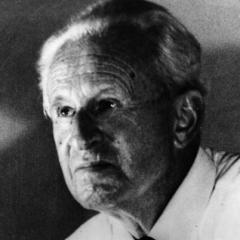
Herbert Marcuse
Herbert Marcuse

Herbert Marcuse was a German-American philosopher born on July 19, 1898, and died on June 29, 1979. He was one of the leading figures of the Frankfurt School and is known for his work on cultural criticism and social theory. more

You May Also Like

“The range of socially permissible and desirable satisfaction is greatly enlarged, but through this satisfaction, the Pleasure Principle is reduced deprived of the claims which are irreconcilable with the established society. Pleasure, thus adjusted, generates submission.”

“Freed from the sublimated form which was the very token of its irreconcilable dreams - a form which is the style, the language in which the story is told - sexuality turns into a vehicle for the bestsellers of oppression. ... This society turns everything it touches into a potential source of progress and of exploitation, of drudgery and satisfaction, of freedom and of oppression. Sexuality is no exception.”

“Many, and I think the determining, constitutive facts remain outside the reach of the operational concept. And by virtue of this limitation this methodological injunction against transitive concepts which might show the facts in their true light and call them by their true name the descriptive analysis of the facts blocks the apprehension of facts and becomes an element of the ideology that sustains the facts. Proclaiming the existing social reality as its own norm, this sociology fortifies in the individuals the "faithless faith" in the reality whose victims they are.”

“At the classical origins of philosophic thought, the transcending concepts remained committed to the prevailing separation between intellectual and manual labor to the established society of enslavement. ... Those who bore the brunt of the untrue reality and who, therefore, seemed to be most in need of attaining its subversion were not the concern of philosophy. It abstracted from them and continued to abstract from them.”

“In [Aristotle's] formal logic, thought is organized in a manner very different from that of the Platonic dialogue. In this formal logic, thought is indifferent toward its objects. Whether they are mental or physical, whether they pertain to society or to nature, they become subject to the same general laws of organization, calculation, and conclusion - but they do so as fungible signs or symbols, in abstraction from their particular "substance." This general quality (quantitative quality) is the precondition of law and order - in logic as well as in society - the price of universal control.”

“Dialectical logic undoes the abstractions of formal logic and of transcendental philosophy, but it also denies the concreteness of immediate experience. To the extent to which this experience comes to rest with the things as they appear and happen to be, it is a limited and even false experience. It attains its truth if it has freed itself from the deceptive objectivity which conceals the factors behind the facts - that is, if it understands its world as a historical universe, in which the established facts are the work of the historical practice of man.”

“Reason ... contradicts the established order of men and things on behalf of existing societal forces that reveal the irrational character of this order for "rational" is a mode of thought and action which is geared to reduce ignorance, destruction, brutality, and oppression.”