Quotessence
Home / Quotes / Quote by John Galt

Quote by John Galt

“But now to begin about the jaunt. When a'thing was put in an order, me and the guidwife, with Clemy, your lady mother, after an early breakfast, steppit into our own carriage, whereto, behind, divers trunks were strappit; and we trintlet awa down the north road, taking the airt of the south wind that blaws in Scotland. At first it was very pleasant; and I had never been much in the country in a chaise, I was diverted to see how, in a sense, the trees came to meet us, and passed, as if they had been men of business having a turn to do. ...we journeyed on with a sobriety that was heartsome without banter; for really the parks on both sides were salutory to see. The hay was mown, and the corn was verging to the yellow. The haws on the hedges, though as green as capers, were a to-look; the cherries in the gardens were over and gone; but the apples in the orchards were as damsels entering their teens. When I was nota-beneing in this way, your grandmother consternated a great deal to Clemy, saying she never thought that I had such a beautiful taste for the poeticals, and that I was surely in a fit of the bucolicks. But I, hearing her, told her I had aye a notion of the country; only that I had soon seen fallen leaves were not coined money, which, if a man would gather, it behoved him to make his dwelling-place in the howffs and thoroughfares of the children of men.”

Quote by John Galt

Work

Selected Short Stories

This book compiles a diverse range of short stories, showcasing the talents of multiple authors across different genres and styles. more

Author
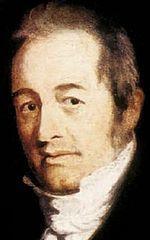
John Galt
John Galt

John Galt, born on May 2, 1779, and died on April 11, 1839, was an influential British novelist. Known for his vivid portrayal of Scottish rural life and profound insights into social issues, his works have left a lasting impact on 19th-century literature. more

You May Also Like

“Wan decade frae wir last self-defeatin referendum, we're close tae hae the centenary ae MacDiarmid's masterpiece, A Drunk Man Looks at the Thistle. Oan the man's daith, Norman MacCaig said they should observe twa minutes' pandemonium. Fine description ae MacDiarmid himself, as much as whit he unleashed. MacDiarmid wiss Scotland's ultimate political poet. We winna rehearse the man's mony faults here - "problematic", says Heaney. Aye. And in spite ae this, MacDiarmid's mair important tae the cause ae Scots and Scotland than ony ither poet frae the previous century. "My job, as I see it, has never been to lay a tit's egg, but to erupt like a volcano, emitting not only flame, but a lot of rubbish." And that's hou Mount MacDiarmid maun be regarded: tempted as we may be tae tak oot the rubbish, we canna thraw the hail lot awa, as wull shairly be settin the bins ablaze. An whit's mair self-defeatin nor a bin fire?”

“When my grandmother makes a mistake, she says 'Ah tell a leh'... But I feel the same whenever I use conversational English picked up after fourteen years at Oxford. Or whenever I lapse into a full-throated Dundonian Scots at home and someone announces, 'Ye've no lost yir accent'. Herbert speak with forked tongue.”

“Ach!" cried Emmeline impatiently, "you had aye a saft side to Madge. Onybody wi' their twa een in their heid cud a' seen the road she was like to tak. Wi' her palaverin' an' her pooderin' an' her this an' that. She had a' her orders, had Madge. An' a stink o scent 'at wad knock ye doon. Foozlin' her face wi' pooders. Eneuch to pit faces ooten fashion. I wadna be seen ga'in' the length o' masel wi' a face like yon. A wadna ging the midden sic a sicht.”

“Now Scots, it must be observed, is not English badly spelled; nor is it a dialect of English. To simplify, but not in a direction away from the truth; the Scots language was a development - and by now is a degeneration - of the Anglian branch of what is called Old English, and was originally spoken from the Forth to the Humber - that's to say, on both sides of the Border. The Saxon branch to the South flourished and became what we call English. With the establishment of the Border, the Anglian branch developed as Scots. Scots and English, therefore, are cousin languages with a common ancestor, and it is as absurdto call Scots a dialect of English as it would be to call English a dialect of Scots.”

“The language of this Poeme is (as thou seeist) mixt of the English and Scottish Dialects; which perhaps may be vnpleasant and irksome to some readers of both nations. But I hope the gentle and judicious English reader will beare with me, if I retaine some badge of mine owne countrie, by vsing sometimes words that are peculiar therevnto, especiallie when I finde them propre, and significant. And as for my owne countrymen, they may not justly finde fault with me, if for the more parte I vse the English phrase, as worthie to be preferred before our owne for the elegance and perfection thereof. Yea I am perswaded that both countrie-men will take in good part the mixture of their Dialects, the rather for that the bountiful providence of God doth invite them both to a staiter vnion and conjunction aswell in languages as in other respectes.”

“Eugenics wis aye a gey sair pynt - the richt tae chuse yer ain mairraige pairtner, especially the wumman's richt, wis yin o thair vauntit freedoms, in contrast tae the FZ. Nanetheless, the Eugenics Law wis desingt tae discourage fowk, nae twa weys aboot it, fae hain bairns wi expensive medical problems. Parents that deleeberately incurrt costs for an avoidable genetic ill or disabeelity got nae benefits, nae maternity leave, nae schuill place for the bairn, naethin.”

“Scots words to tell to your heart how they wrung it and held it, the toil of their days and unendingly their fight. And the next minute that passed from you, you were English, back to the English words so sharp and clean and true - for a while, till they slid so smooth from your throat you knew they could never say anything that was worth the saying at all.”