“Salt water when it turns into vapour becomes sweet, and the vapour does not form salt water when it condenses again. This I know by experiment. The same thing is true in every case of the kind: wine and all fluids that evaporate and condense back into a liquid state become water. They all are water modified by a certain admixture, the nature of which determines their flavour.”
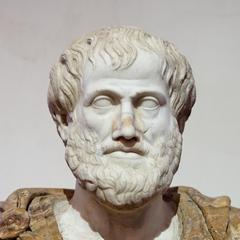
Quote by Aristotle
Work
Complete Works of Aristotle, Volume 1: The Revised Oxford Translation
The Complete Works of Aristotle, Volume 1: The Revised Oxford Translation is a scholarly compilation that presents the works of Aristotle in English. This volume is part of a multi-volume set that aims to provide a definitive edition of Aristotle's writings. The translations are based on the Revised Oxford Translation series, which is known for its accuracy and scholarly rigor. The collection includes a variety of Aristotle's works, covering philosophy, science, and other subjects, offering readers a comprehensive view of his intellectual contributions. more
Author
You May Also Like
Source: The Tao of Physics: An Exploration of the Parallels Between Modern Physics and Eastern Mysticism
“The child which overbalances itself in learning to walk is experimenting on the law of gravity.”
Source: Methods of Social Reform: And Other Papers
“How inappropriate to call this planet Earth when it is quite clearly Ocean.”
Source: Experimental Medicine
Source: The Collected Works of Sir Humphry Davy (etc.)