Quotessence
Home / Quotes / Quote by Filippo Tommaso Marinetti

Quote by Filippo Tommaso Marinetti

Work

The Manifesto of Futurism

Written by Filippo Tommaso Marinetti, this influential document outlines the principles of Futurism, a movement that embraced the dynamism and energy of modern life, celebrating technology, speed, and the Machine Age. more

Author
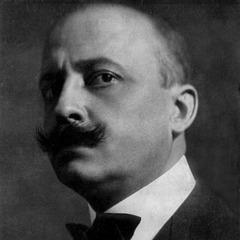
Filippo Tommaso Marinetti

Italian poet and one of the founders of the Futurist movement. Born on December 22, 1876, in Alessandria, Italy, he passed away on December 2, 1944. His poetry and theories had a profound impact on 20th-century literature. more

You May Also Like

“Art deals with profound and simple moods. Let us suppose that the artist - in this instance (the artist) Picabia - gets a certain impression by looking at our skyscrapers, our city, our way of life, and that he tries to reproduce it. He will convey it in plastic ways on the canvas, even though we see neither skyscrapers nor city on it.”

“We had stayed up all night, my friends and I, under hanging mosque lamps with domes of filigreed brass, domes starred like our spirits, shining like them with the prisoned radiance of electric hearts. For hours we had trampled our atavistic ennui into rich oriental rugs, arguing up to the last confines of logic and blackening many reams of paper with our frenzied scribbling.”

“The compliments you are about to pay could only sadden me, because what you love in our dear peninsula is exactly the object of our hatreds. Indeed, you crisscross Italy only to meticulously sniff out the traces of our oppressive past, and you are happy, insanely happy, if you have the good fortune to carry home some miserable stone on which our ancestors have trodden.”

“When will you disembarrass yourselves of the lymphatic ideology of that deplorable Ruskin, which I would like to cover with so much ridicule that you would never forget it? With his morbid dream of primitive and rustic life, with his nostalgia for Homeric cheeses and legendary wool-spinners, with his hatred for the machine, steam power, and electricity, that maniac of antique simplicity is like a man who, after having reached full physical maturity, still wants to sleep in his cradle and feed himself at the breast of his decrepit old nurse in order to recover his thoughtless infancy.”