Quotessence
Home / Quotes / Quote by Piers Paul Read

Quote by Piers Paul Read

“There was one question, however, which Inciarte had asked him and he could not answer. Why was it that he had lived while others had died? What purpose had God in making this selection? What sense could be made out of it? ‘None,’ replied Father Andrés. ‘There are times when the will of God cannot be understood by our human intelligence. There are things which in all humility we must accept as a mystery.”

Quote by Piers Paul Read

Work

Alive: The Story of the Andes Survivors

Browse quotes and source details for this work. more

Author
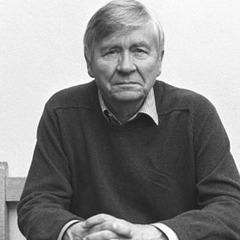
Piers Paul Read
Piers Paul Read

Piers Paul Read, born on March 7, 1941, is a renowned British novelist known for his suspense and adventure novels. His works have won numerous literary awards and have been adapted into films and television series. more

You May Also Like

“The bubble logic driving tulipomania has since acquired a name: “the greater fool theory.” Although by any conventional measure it is folly to pay thousands for a tulip bulb (or for that matter an Internet stock), as long as there is an even greater fool out there willing to pay even more, doing so is the most logical thing in the world.”

“A distinguished writer [Siméon Denis Poisson] has thus stated the fundamental definitions of the science: 'The probability of an event is the reason we have to believe that it has taken place, or that it will take place.' 'The measure of the probability of an event is the ratio of the number of cases favourable to that event, to the total number of cases favourable or contrary, and all equally possible' (equally like to happen). From these definitions it follows that the word probability, in its mathematical acceptation, has reference to the state of our knowledge of the circumstances under which an event may happen or fail. With the degree of information which we possess concerning the circumstances of an event, the reason we have to think that it will occur, or, to use a single term, our expectation of it, will vary. Probability is expectation founded upon partial knowledge. A perfect acquaintance with all the circumstances affecting the occurrence of an event would change expectation into certainty, and leave neither room nor demand for a theory of probabilities.”

“I think a strong claim can be made that the process of scientific discovery may be regarded as a form of art. This is best seen in the theoretical aspects of Physical Science. The mathematical theorist builds up on certain assumptions and according to well understood logical rules, step by step, a stately edifice, while his imaginative power brings out clearly the hidden relations between its parts. A well constructed theory is in some respects undoubtedly an artistic production. A fine example is the famous Kinetic Theory of Maxwell. ... The theory of relativity by Einstein, quite apart from any question of its validity, cannot but be regarded as a magnificent work of art.”

“Suppose that members of a religious movement, such as Christianity, maintain that the existence of some powerful god and its goals or laws can be known through their scriptures, their prophets, or some special revelation. Suppose further that the evidence that is available to support the reliability of those scriptures, prophets, or special revelations is weaker than that God is hypothetically capable of producing. That is, suppose that Christians maintain that Jesus was resurrected on the basis of the Gospels, or that God’s existence can be known through the Bible, or Muslims insist on the historical authenticity of the Koran. Could God, the almighty creator of the universe, have brought it about so that the evidence in favor of the resurrection, the Bible, or the Koran was better than we currently find it? I take it that the answer is obviously yes. Even if you think there is evidence that is sufficient to prove the resurrection, a reasonable person must also acknowledge that it could have been better. And there’s the problem. If the capacity of that god is greater than the effectiveness or quality of those scriptures, prophets, or special revelations, then the story they are telling contradicts itself. 'We know our god is real on the basis of evidence that is inadequate for our god.' Or, 'The grounds that lead us to believe in our god are inconsistent with the god we accept; nevertheless, we believe in this god that would have given us greater evidence if it had wished for us to believe in it.' Given the disparity between the gods that these religious movements portend and the grounds offered to justify them, the atheist is warranted in dismissing such claims. If the sort of divine being that they promote were real and if he had sought our believe on the basis of the evidence, the evidential situation would not resemble the one we are in. The story doesn’t make internal sense. A far better explanation is that their enthusiasm for believing in a god has led them to overstate what the evidence shows. And that same enthusiasm has made it difficult for them to see that an all powerful God would have the power to make his existence utterly obvious and undeniable. Since it’s not, the non-believer can’t possibly be faulted for failing to believe.”