“Our minds thus grow in spots; and like grease-spots, the spots spread. But we let them spread as little as possible: we keep unaltered as much of our old knowledge, as many of our old prejudices and beliefs, as we can. We patch and tinker more than we renew. The novelty soaks in; it stains the ancient mass; but it is also tinged by what absorbs it.”
Quote by William James
Work
Pragmatism and the Conception of Thruth
This book delves into the philosophical theory of pragmatism, examining its principles and how they relate to the concept of truth. It provides an in-depth analysis of the philosophical underpinnings of pragmatism and its impact on various philosophical discussions. more
Author
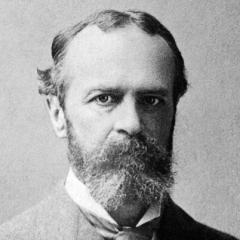
William James
William James, born on January 11, 1842, and died on August 26, 1910, was an influential American philosopher, psychologist, and writer. He is considered one of the founders of functionalism in psychology and has had a profound impact on the fields of psychology, philosophy, and religion. more
You May Also Like
Source: Pragmatism and Other Writings
“A difference which makes no difference is no difference at all.”
Source: The Principles Of Psychology -
“A purely disembodied human emotion is a nonentity.”
Source: What is an Emotion?
Source: The Will to Believe: And Other Essays in Popular Philosophy