Quotessence
Home / Quotes / Quote by Daniel Keyes

Quote by Daniel Keyes

“Chiudendo la porta sul mondo reale, potremo vivere in pace nel nostro. Sappiamo che un mondo senza dolore è un mondo senza sentimento... ma un mondo senza sentimento è un mondo senza dolore.”

Quote by Daniel Keyes

Work

The Minds of Billy Milligan

Browse quotes and source details for this work. more

Author
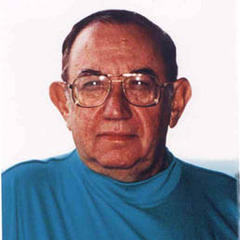
Daniel Keyes
Daniel Keyes

Daniel Keyes, born on August 9, 1927, was a renowned American author known for his profound psychological insights and exploration of human nature. His most famous work, 'Flowers for Algernon,' tells the story of a man with intellectual disability who undergoes an operation to increase his intelligence, delving deeply into the complexities of human emotions and morality. Keyes' writing has had a significant impact on contemporary literature, offering both readers and the fields of psychology and sociology valuable insights. more

You May Also Like

“And there, sir, lies the entire problem, to have within oneself the inseparable reality and the material clarity of feeling, to have it in such a degree that the feeling cannot but express itself, to have a wealth of words and of formal constructions which can join in the dance, serve one's purpose—and at the very moment when the soul is about to organize its wealth, its discoveries, this revelation, at the unconscious moment when the thing is about to emanate, a higher and evil will attacks the soul like vitriol, attacks the word and image mass, attacks the mass of feeling and leaves me panting at the very door of life.”

“When the matter at hand is eternal salvation or damnation, the “unsettled soul” suspicious of ritual and tradition looks for evidence of her spiritual condition as close to the knowing self as possible, not in the objective mathematical language to which the Royal Society aspired but in objective experiences of spontaneous, passionate speech: in the substance of the inmost, most immediate thoughts and feelings, evinced by spontaneous, fervent prayer, which it takes both scientifically and economically as proofs and tokens of grace. If the Restoration witnessed the rise of what Robert Markley has called the ideology of objectivity, it also saw the coalescence of a related ideology of spontaneity. Concerned with the science of the soul and informed by emerging market and commercial logic, the cardinal points of this ideology were authentic and immediate sincerity (as opposed to performance or artifice), pure desire (as opposed to coldness, hypocrisy or a bifurcation between doctrinal knowledge and feeling), freedom (as opposed to form), and novelty and currency (as opposed to the repetitive, the boring, and the out-of-date). In the consolidation of the discourse and practice of free prayer, we see the culmination of Renaissance crises of representation and the fruition of the dramatic Reformation attacks on ritual, when under increasing pressures toward certainty and ever more entrenched economic logics, spontaneity becomes policy: not an option, but, for growing numbers of Protestants, paradoxically an obligation and the sine qua non of valid prayer and a saved subjectivity.”