Quotessence
Home / Quotes / Quote by Marshall Savage

Quote by Marshall Savage

“If we deny our awesome challenge; turn our backs on the living universe, and forsake our cosmic destiny, we will commit a crime of unutterable magnitude. Mankind alone has the power to carry out this fundamental change in the universe. Our failure would lead to consequences unthinkable. This is perhaps the first and only chance the universe will ever have to awaken from its long night and live. We are the caretakers of this delicate spark of Life. To let it flicker and die through ignorance, neglect, or lack of imagination is a horror too great to contemplate.”

Quote by Marshall Savage

Author
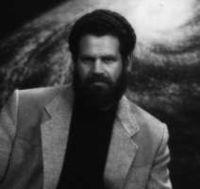
Marshall Savage
Marshall Savage

Marshall Savage, born in 1955, is a mysterious figure whose profession and background remain unknown. His life story and specific achievements are not well-documented, making it difficult to provide detailed information about him. more

You May Also Like

“If the human species, or indeed any part of the biosphere, is to continue to survive, it must eventually leave the Earth and colonize space. For the simple fact of the matter is, the planet Earth is doomed... Let us follow many environmentalists and regard the Earth as Gaia, the mother of all life (which indeed she is). Gaia, like all mothers, is not immortal. She is going to die. But her line of descent might be immortal. . . . Gaia's children might never die out-provided they move into space. The Earth should be regarded as the womb of life-but one cannot remain in the womb forever.”

“Unless people can see broad vistas of unused resources in front of them, the belief in limited resources tends to follow as a matter of course. And if the idea is accepted that the world's resources are fixed, then each person is ultimately the enemy of every other person, and each race or nation is the enemy of every other race or nation. The extreme result is tyranny, war and even genocide. Only in a universe of unlimited resources can all men be brothers.”

“If humans one day become extinct from a catastrophic collision, there would be no greater tragedy in the history of life in the universe. Not because we lacked the brain power to protect ourselves but because we lacked the foresight. The dominant species that replaces us in post-apocalyptic Earth just might wonder, as they gaze upon our mounted skeletons in their natural history museums, why large headed Homo sapiens fared no better than the proverbially peabrained dinosaurs.”

“This brief century of ours is arguably the most significant one in the history of our universe. We'll have the technology either to self-destruct, or [to] seed our cosmos with life. The situation is so unstable that I doubt we can dwell at this fork in the road for more than another hundred years. But if we end up going the life route instead of the death route, then in a distant future our cosmos will be teaming with life, all of which can be traced back to what we do-here and now. I don't know how we'll be thought of, but I'm sure that we won't be remembered as insignificant.”

“Today the human race is a single twig on the tree of life, a single species on a single planet. Our condition can thus only be described as extremely fragile, endangered by forces of nature currently beyond our control, our own mistakes, and other branches of the wildly blossoming tree itself. Looked at this way, we can then pose the question of the future of humanity on Earth, in the solar system, and in the galaxy from the standpoint of both evolutionary biology and human nature. The conclusion is straightforward: Our choice is to grow, branch, spread and develop, or stagnate and die.”