“In 1924–1929, sentences were determined by joint administrative and economic consideration. Beginning in 1924, because of national unemployment, the courts reduced the number of verdicts which sentenced prisoners to corrective labor while they continued to live at home and increased short-term prison sentences. These cases involved only nonpolitical offenders, of course. As a result, prisons were overcrowded with short-termers serving sentences of up to six months, and not enough use was being made of them in labor colonies. At the beginning of 1929, the People's Commissariat of justice of the U.S.S.R., in Circular No. 5, condemned short-term sentences and, on November 6, 1929, the eve of the twelfth anniversary of the October Revolution, when the country was supposedly entering on the construction of socialism, a decree of the Central Executive Committee and the Council of People's Commissars simply forbade all sentences of less than one year!”
Quote by Aleksandr Solzhenitsyn
Work
The Gulag Archipelago
Browse quotes and source details for this work. more
Author
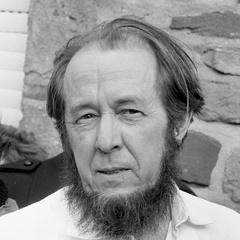
Aleksandr Solzhenitsyn
Aleksandr Solzhenitsyn, a Russian novelist, was born on December 11, 1918, and died on August 3, 2008. He is renowned for his works that profoundly exposed the dark side of the Soviet political system and is considered one of the greatest writers of the 20th century. more
You May Also Like
Source: The Improbability of Love
Source: Beauty Is a Wound
Source: Krakatoa: The Day the World Exploded: August 27, 1883
Source: Krakatoa: The Day the World Exploded: August 27, 1883
Source: Following Shadows
Source: Tropische zoutwaterliefde: humoristische roman
“De hel is van binnen gestoffeerd als een Indisch hotel... en je krijgt er hetzelfde te eten ook...”
Source: Tropenadel: Van Vliet, Sweet & Cy