Quotessence
Home / Quotes / Quote by Ella Baker

Quote by Ella Baker

“My association with the Southern Christian Leadership Conference is sort of predated by an effort that we were a part of here in New York City regarding the reaction to this 1954 Supreme Court [Brown v Board of Education] decision.”

Quote by Ella Baker

Author
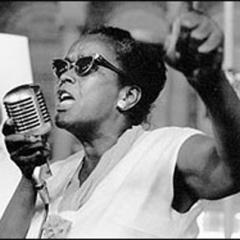
Ella Baker
Ella Baker

Ella Baker (December 13, 1903 – December 13, 1986) was a prominent African American civil rights activist known for her grassroots organizing and mentorship of young leaders. Born in Norfolk, Virginia, and raised in North Carolina, she was influenced by her grandmother's experience as a slave. Baker joined the NAACP in the 1930s, serving as a field secretary and branch director, expanding its membership across the South. She later worked with the Southern Christian Leadership Conference (SCLC) and helped found the Student Nonviolent Coordinating Committee (SNCC), emphasizing collective action over charismatic leadership. Baker advocated for 'group-centered leadership,' empowering ordinary people and youth. Her work shaped the strategy and structure of the civil rights movement, though she often remained in the background. She died on December 13, 1986, at age 83. more

You May Also Like

“I believe, the NAACP began to try to organize parents of Negro children to file petitions with the boards of education regarding the integration of the school system. You had some very severe economic reprisals against people in Mississippi and in South Carolina. So, in order to try to help to meet some of the physical needs and the economic needs of people in Clarendon County [SC] who had been displaced from the land, and otherwise, and in certain sections of Mississippi, we organized in New York City something called "In Friendship".”

“I think the reasons for not selecting persons like the Reverend Borders and John Wesley Dobbs were, in my book rather obvious reasons: because they were people who were basically oriented in the direction of the established method of not confronting the power structure, but trying to elicit concessions by various and sundry means of, well, let's call it accommodating leadership.”

“I began to feel that my greatest sense of success would raise the level of masses of people, rather than the individual being accepted by the Establishment. So, this kind of personal thinking, combined with, say, even the little bit more radical thinking - because at one time the pacifist movement was a very radical concept.”