Quotessence
Home / Quotes / Quote by Charles Dickens

Quote by Charles Dickens

Work

British Classics: A Tale of Two Cities (Illustrated)

Charles Dickens' "A Tale of Two Cities" is a renowned novel that vividly contrasts the lives of citizens in London and Paris during the period of the French Revolution. The illustrated edition captures the historical setting and the emotional depth of the story, offering readers a visual and literary experience. more

Author
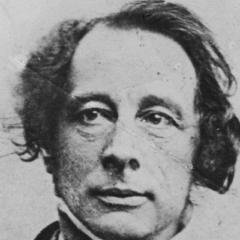
Charles Dickens
Charles Dickens

Charles Dickens, a British writer born on February 7, 1812, and died on June 9, 1870, is one of the greatest novelists of the 19th century. Known for his profound social criticism and vivid narrative style, Dickens' works extensively cover social reality, revealing various issues in the British society of the time. more

You May Also Like

“Do we behave out of fear of punishment, or out of the demands of our heart? For me, it is the latter, as I would hope is true for all adults, thought I know from bitter experience that such is not often the case. To act in a manner designed to catapult you into heaven would seem transparent to a god, any god,for if ones heart is not in allignment with the creator of that heaven, then... what is the point?”

“Suppose the looking glass smashes, the image disappears, and the romantic figure with the green of forest depths all about it is there no longer, but only that shell of a person which is seen by other people - what an airless, shallow, bald, prominent world it becomes! A world not to be lived in. As we face each other in omnibuses and underground railways we are looking into the mirror that accounts for the vagueness, the gleam of glassiness, in our eyes.”

“What's wrong with men?" Tenar inquired cautiously. As cautiously, lowering her voice, Moss replied, "I don't know, my dearie. I've thought on it. Often I've thought on it. The best I can say it is like this. A man's in his skin, see, like a nut in its shell." She held up her long, bent, wet fingers as if holding a walnut. "It's hard and strong, that shell, and it's all full of him. Full of grand man-meat, man-self. And that's all. That's all there is. It's all him and nothing else, inside.”

“If women had power, what would men be but women who can't bear children? And what would women be but men who can?" "Hah!" went Tenar; and presently, with some cunning, she said, "Haven't there been queens? Weren't they women of power?" "A queen's only a she-king," said Ged. She snorted. "I mean, men give her power. They let her use their power. But it isn't hers, is it? It isn't because she's a woman that she's powerful, but despite it.”

“What is a woman's power then?" she asked. "I don't think we know." "When has a woman power because she's a woman? With her children, I suppose. For a while..." "In her house, maybe." She looked around the kitchen. "But the doors are shut," she said, "the doors are locked." "Because you're valuable." "Oh yes. We're precious. So long as we're powerless.”