Quotessence
Home / Quotes / Quote by John Milton

Quote by John Milton

“Ye cannot make us now lesse capable, lesse knowing, lesse eagarly pursuing of the Truth, unlesse ye first make yourselves that made us so, lesse the lovers, lesse the founders of our true Liberty. We can grow ignorant again, brutish, formall, and slavish as ye found us, but you then must first become that which ye cannot be, oppressive, arbitrary, and tyrannous as they were from whom ye have free'd us.”

Quote by John Milton

Work

Areopagitica

Browse quotes and source details for this work. more

Author

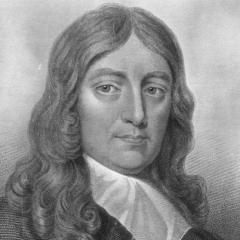
John Milton
John Milton

John Milton, born on December 9, 1608, in London, and died on November 8, 1674, was a renowned English poet and scholar. He is best known for his epic poem 'Paradise Lost,' which has had a profound impact on world literature. more

You May Also Like

“...know, that so far to distrust' the judgement and the honesty of one who hath but a common repute in Learning and never yet offended, as not to count him fit to print his mind without a tutor and examiner lest he should drop a schism or something of corruption, is the greatest displeasure and indignity to a free and knowing spirit that can be put upon him.”

“Blasphemy is just the fanatic's name for criticism. Charb writes wisely: 'A believer can blaspheme only to the extent that the idea of blasphemy holds any meaning to him. A non-believer, no matter how hard he tries, 'cannot' blaspheme. God is sacred only to those who believe in him. If you wish to insult or offend God, you have to be sure that he exists. The strategy used by minority group activists masquerading as anti-racists is to pass off blasphemy as Islamophobia and Islamophobia as racism.' The crucial distinction we must defend is between acts of imagination and acts of violence....Faith is not the enemy. Fanaticism is the enemy. It always is. But only a fool would deny that faith has been the seedbed of fanaticism in mankind's long and sorry struggle for the light. As much as at times we need to seek "solidarity" among unlike groups, we also need to "desolidarize," to "unsolidarize"—to put the people we know before the abstract categories we imagine. Come to think of it, making people, with all their flaws, fully visible while leaving generalized types alone is exactly what the caricaturist has always done for us. It's his special form of bravery.”

“Public opinion! I don't know how sociologists define it, but it seems obvious to me that it can only consist of interacting individual opinions, freely expressed and independent of government or party opinion. So long as there is no independent public opinion in our country, there is no guarantee that the extermination of millions and millions for no good reason will not happen again, that it will not begin any night—perhaps this very night.”

“Los hesicastas aspiraban a conseguir la paz o la quietud para llegar a la unión íntima con Dios o la contemplación. Para ello cultivaban el silencio, tanto exterior como interior, ante todo por medio del control de los pensamientos. Esta corriente espiritual dentro del cristianismo oriental es casi una constante hasta nuestros días y va muy unida a la oración del corazón.”