Quotessence
Home / Quotes / Quote by Alice Miller

Quote by Alice Miller

“[The mutually dependent child] cannot rely on his own emotions, has not come to experience them through trial and error, has no sense of his own real needs, and is alienated from himself to the highest degree. Under these circumstances he cannot separate from his parents, and even as an adult he is still dependent on affirmation from his partner, from groups, and especially from his own children ... Unless the heir casts off his 'inheritance' by becoming fully conscious of his true past, and thus of his true nature, loneliness in the parental home will necessarily be followed by an adulthood lived in emotional isolation.”

Quote by Alice Miller

Work

The Drama of the Gifted Child: The Search for the True Self

This book delves into the complexities of the psychological development of gifted individuals, examining the unique challenges they encounter as they strive to discover and express their true selves. more

Author
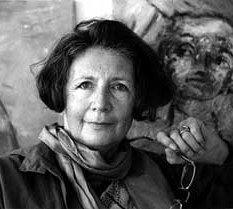
Alice Miller
Alice Miller

Alice Miller, born on January 12, 1923, and died on April 12, 2010, was a renowned psychologist. Her research focused on child psychology and the psychology of abuse, delving deeply into the psychological impact of child abuse and neglect. more

You May Also Like

“When parents, in the belief that they are doing the right thing, trample underfoot some ideal that lies latent in the heart of their child they cause, more often than not, to germinate in its place disillusionment, hatred, vice; it is fortunate indeed if the existence thus turned awry does not degrade into a life of crime, instead of one of calm content and universal respect.”

“Often a child's very gifts (his great intensity of feeling, depth of experience, curiosity, intelligence, quickness-and his ability to be critical) will confront his parents with conflicts that they have long sought to keep at bay by means of rules and regulations. These regulations must then be rescued at the cost of the child's development. All of this can lead to an apparently paradoxical situation when parents are proud of their gifted child and who admire him are forced by their own repression to reject, suppress, or even destroy what is best, because truest, in that child.”

“When you're young, you think of your parents with the simplest adjectives. As you get older, you add more adjectives and notice some of them contradict each other. He's tall. He's tall and strong. He's tall and strong and smart. He's tall and strong and smart but busy. He's tall and strong and smart but busy and aloof and judgemental. She's safe. She's safe and kind. She's safe and kind and caring. She's safe and kind and caring but sad. She's safe and kind and caring but sad and lonely and brittle. Maturity colonizes your adolescent mind, like an ultraviolet photograph of a vast cosmic nebula that turns out, on closer examination, to be a pointillist self-portrait.”

“Down by the lake Portia saw the pale green of her mother’s gown. She was with Papa, of course, and as Portia watched, he pulled her into his arms. They must be kissing, though she couldn’t see that far in the hazy light. Their bodies were so close together that they looked like one person. There was something about the way Papa held their mother tightly, as if she were very precious, that made Portia happy down to the bottom of her stomach. “What’s out there?” Emily said, coming up behind her. Portia pointed, even though ladies don’t point. “Ridiculous,” Emily said with a huff of disgust. “That’ll end in another baby, mark my words, Portia.” And it did.”