“Last year I was on Pat Robertson's show, and we discussed our basic Christian faith - for instance, separation of church and state. It's contrary to my beliefs to try to exalt Christianity as having some sort of preferential status in the United States. That violates the Constitution. I'm not in favor of mandatory prayer in school or of using public funds to finance religious education.”
Quote by Jimmy Carter
Author
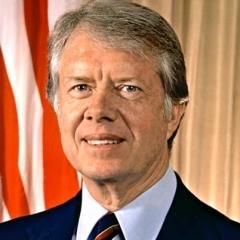
Jimmy Carter
Jimmy Carter, born on October 1, 1924, was the 39th President of the United States, serving from 1977 to 1981. His presidency was characterized by a focus on human rights and international diplomacy, reflecting his dedication to peace and social justice. Post-presidency, Carter has been active in the non-profit sector, notably through the Carter Center, which he founded to promote peace and health worldwide. more
You May Also Like
Source: The world's most famous court trial: State of Tennessee v. John Thomas Scopes; complete stenographic report of the court test of the Tennessee anti-evolution act at Dayton, July 10 to 21, 1925, including speeches and arguments of attorneys
Source: Correspondence of Andrew Jackson: to April 30, 1814
“The better a man is the more mistakes will he make – for the more new things he will try.”
Source: Beyond Talent: Become Someone Who Gets Extraordinary Results
Source: The writings of George Washington from the original manuscript sources, 1745-1799