Quotessence
Home / Quotes / Quote by Arthur Balfour

Quote by Arthur Balfour

“But science is the great instrument of social change, all the greater because its object is not change but knowledge, and its silent appropriation of this dominant function, amid the din of political and religious strife, is the most vital of all the revolutions which have marked the development of modern civilisation.”

Quote by Arthur Balfour

Author
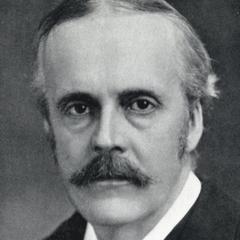
Arthur Balfour
Arthur Balfour

Arthur Balfour was a former Prime Minister of the United Kingdom, born on July 25, 1848, and died on March 19, 1930. He was an important figure in British politics during the late 19th and early 20th centuries, known for his contributions to fiscal and foreign policy. more

You May Also Like

“But the greatest error of all the rest is the mistaking or misplacing of the last or farthest end of knowledge: for men have entered into a desire of learning and knowledge, sometimes upon a natural curiosity and inquisitive appetite; sometimes to entertain their minds with variety and delight; sometimes for ornament and reputation; and sometimes to enable them to victory of wit and contradiction; and most times for lucre and profession; and seldom sincerely to give a true account of their gift of reason, to the benefit and use of men.”

“By profession a biologist, [Thomas Henry Huxley] covered in fact the whole field of the exact sciences, and then bulged through its four fences. Absolutely nothing was uninteresting to him. His curiosity ranged from music to theology and from philosophy to history. He didn't simply know something about everything; he knew a great deal about everything.”

“By this we may understand, there be two sorts of knowledge, whereof the one is nothing else but sense, or knowledge original (as I have said at the beginning of the second chapter), and remembrance of the same; the other is called science or knowledge of the truth of propositions, and how things are called, and is derived from understanding.”

“Even those to whom Providence has allotted greater strength of understanding, can expect only to improve a single science. In every other part of learning, they must be content to follow opinions, which they are not able to examine; and, even in that which they claim as peculiarly their own, can seldom add more than some small particle of knowledge, to the hereditary stock devolved to them from ancient times, the collective labour of a thousand intellects.”