“A painter like Picasso, who runs through many periods and phases, ends up by saying all those things which are on the tip of the tongue of the age to say, and finally sterilizes the originality of his contemporaries and juniors.”
Quote by Norbert Wiener
Work
The human use of human beings: cybernetics and society
This book examines the concept of cybernetics—the science of communication and control in machines and living organisms—and applies it to human society. The author discusses how information theory and feedback loops influence social structures, governance, and individual autonomy. It argues that understanding these principles is essential for using technology and knowledge in ways that enhance human dignity and freedom, rather than diminishing them. The text reflects mid-20th-century concerns about automation, control systems, and the ethical responsibilities of humans in an increasingly interconnected world. more
Author
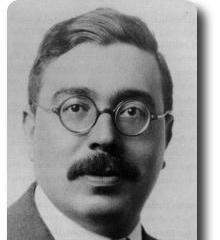
Norbert Wiener
Norbert Wiener, born on November 26, 1894, and died on March 18, 1964, was an American mathematician and a founding figure in the field of cybernetics. Known as the 'father of the information age,' Wiener made significant contributions to mathematics, physics, and engineering, particularly in the areas of stochastic processes, Fourier analysis, and control theory. more
You May Also Like
“Oh, my. I'd forgotten how much I hate space travel.”
Source: Star Wars®: Episode IV: A New Hope
“I wanted to make a kids' film that would strengthen contemporary mythology.”
Source: A Shilling Cookery for the People: Embracing an Entirely New System of Plain Cookery and Domestic Economy
Source: The Modern Housewife: Or, Ménagère. Comprising Nearly One Thousand Receipts, for the Economic and Judicious Preparation of Every Meal of the Day, and Those for the Nursery and Sick Room; and Minute Directions for Family Management in All Its Branches. Illustrated with Engravings Including the Modern Housewife's Unique Kitchen, and Magic Stove
“Climbing at altitude is like hitting your head against a brick wall - it's great when you stop.”
Source: The Origins of Modern Science