Quotessence
Home / Quotes / Quote by Aleksandr Solzhenitsyn

Quote by Aleksandr Solzhenitsyn

Author
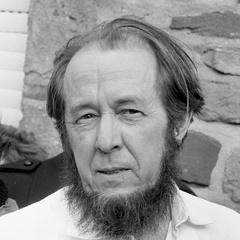
Aleksandr Solzhenitsyn

Aleksandr Solzhenitsyn, a Russian novelist, was born on December 11, 1918, and died on August 3, 2008. He is renowned for his works that profoundly exposed the dark side of the Soviet political system and is considered one of the greatest writers of the 20th century. more

You May Also Like

“Progress, far from consisting in change, depends on retentiveness. When change is absolute there remains no being to improve and no direction is set for possible improvement: and when experience is not retained, as among savages, infancy is perpetual. Those who cannot remember the past are condemned to repeat it. In the first stage of life the mind is frivolous and easily distracted; it misses progress by failing in consecutiveness and persistence. This is the condition of children and barbarians, in which instinct has learned nothing from experience.”

“No live organism can continue for long to exist sanely under conditions of absolute reality; even larks and katydids are supposed, by some, to dream. Hill House, not sane, stood by itself against its hills, holding darkness within; it had stood so for eighty years and might stand for eighty more. Within, walls continued upright, bricks met neatly, floors were firm, and doors were sensibly shut; silence lay steadily against the wood and stone of Hill House, and whatever walked there, walked alone.”

“The truth is, of course, that the curtness of the Ten Commandments is an evidence, not of the gloom and narrowness of a religion, but, on the contrary, of its liberality and humanity. It is shorter to state the things forbidden than the things permitted; precisely because most things are permitted, and only a few things are forbidden.”

“There are two men in each one of us: the scientist, he who starts with a clear field and desires to rise to the knowledge of Nature through observations, experimentation and reasoning, and the man of sentiment, the man of belief, the man who mourns his dead children, and who cannot, alas, prove that he will see them again, but who believes that he will, and lives in the hope – the man who will not die like a vibrio, but who feels that the force that is within him cannot die.”