Quotessence
Home / Quotes / Quote by Neal A. Maxwell

Quote by Neal A. Maxwell

“Trying to observe the slow shift from self-centeredness to empathy is like trying to watch grass grow.”

Quote by Neal A. Maxwell

Author
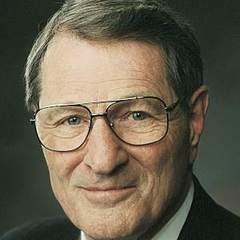
Neal A. Maxwell
Neal A. Maxwell

Neal A. Maxwell was a significant figure in the field of 【Identity Positioning】. Born on July 6, 1926, and passing away on July 21, 2004, his life was marked by notable achievements and contributions that have had a profound impact on the field, earning him widespread recognition in 【Influence Evaluation】. more

You May Also Like

“I think people perceive my creatures as absurd because they look different, but at the same time, they are a little bit familiar. I want people to feel a kind of empathy with them. When you think about it, all nature is kind of strange looking.. in fact, I'm a strange a looking creature.”

“In the vast majority of movies, everything is done for the audience. We are cued to laugh or cry, be frightened or relieved; Hitchcock called the movies a machine for causing emotions in the audience. Bresson (and Ozu) take a different approach. They regard, and ask us to regard along with them, and to arrive at conclusions about their characters that are our own. This is the cinema of empathy.”

“We all are born with a certain package. We are who we are: where we were born, who we were born as, how we were raised. We're kind of stuck inside that person, and the purpose of civilization and growth is to be able to reach out and empathize a little bit with other people. And for me, the movies are like a machine that generates empathy. It lets you understand a little bit more about different hopes, aspirations, dreams and fears. It helps us to identify with the people who are sharing this journey with us.”

“When man faces man the one attempts to put the other to sleep and the other continuously wants to maintain his uprightness. But this is, to speak in the Goethean sense, the archetypal phenomenon of social science. This sleeping-into we may call the social principle, the social impulse of the new era: we have to live over into the other; we have to dissolve with our soul into the other.”

“The ability to imagine oneself in another's place and understand the other's feelings, desires, ideas, and actions. The most obvious example, perhaps, is that of the actor or singer who genuinely feels the part he is performing.”