Quotessence
Home / Quotes / Quote by Edward Bulwer-Lytton, 1st Baron Lytton

Quote by Edward Bulwer-Lytton, 1st Baron Lytton

“Certain I am that every author who has written a book with earnest forethought and fondly cherished designs will bear testimony to the fact that much which he meant to convey has never been guessed at in any review of his work; and many a delicate beauty of thought, on which he principally valued himself, remains, like the statue of Isis, an image of truth from which no hand lifts the veil.”

Quote by Edward Bulwer-Lytton, 1st Baron Lytton

Author
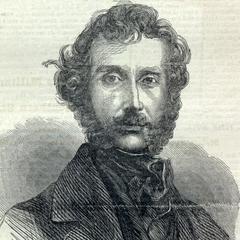
Edward Bulwer-Lytton, 1st Baron Lytton

British novelist known for his historical novels and Gothic tales, famous for works such as 'Peveril of the Peak' and 'Evelyn Hope'. more

You May Also Like

“We may observe in humorous authors that the faults they chiefly ridicule have often a likeness in themselves. Cervantes had much of the knight-errant in him; Sir George Etherege was unconsciously the Fopling Flutter of his own satire; Goldsmith was the same hero to chambermaids, and coward to ladies that he has immortalized in his charming comedy; and the antiquarian frivolities of Jonathan Oldbuck had their resemblance in Jonathan Oldbuck's creator.”

“The most delicate beauty in the mind of women is, and ever must be, an independence of artificial stimulants for content. It is not so with men. The links that bind men to capitals belong to the golden chain of civilization,--the chain which fastens all our destinies to the throne of Jove. And hence the larger proportion of men in whom genius is pre-eminent have preferred to live in cities, though some of them have bequeathed to us the loveliest pictures of the rural scenes in which they declined to dwell.”

“Ask any school-boy up to the age of fifteen where he would spend his holidays. Not one in five hundred will say, "In the streets of London," if you give him the option of green fields and running waters. It is, then, a fair presumption that there must be something of the child still in the character of the men or the women whom the country charms in maturer as in dawning life.”