“It never occurred to him to be spiritually won over to the enemy. Many moderns, inured to a weak worship of intellect and force, might have wavered in their allegiance under this oppression of a great personality. . . . But this was a kind of modern meanness to which Syme could not sink even in his extreme morbidity. Like any man, he was coward enough to fear great force; but he was not coward enough to admire it.”
Quote by Gilbert K. Chesterton
Author
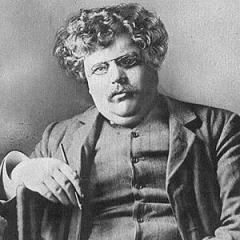
Gilbert K. Chesterton
Gilbert K. Chesterton was an English writer, critic, and theologian, born on May 29, 1874, and died on June 14, 1936. Known for his unique literary style and profound philosophical thinking, Chesterton's works spanned a variety of genres, including novels, poetry, drama, and criticism. more
You May Also Like
“I think I've got Fear down, but how do I take it all the way up to Terror?”
Source: The Sunset Limited: A Novel in Dramatic Form
“A truth should exist, it should not be used like this. If I love you is that a fact or a weapon?”
Source: Returning to Earth
“Each time history repeats itself, the price goes up.”
Source: A Short History Of Progress
Source: The Cosmic Serpent