“The mind of man can never be wholly barren. Through our whole lives we are subject to successive impressions; for, either new ideas are continually flowing in, or traces of the old ones are marked deeper. If, therefore, you be not acquiring good principles be assured that you are acquiring bad ones; if you be not forming virtuous habits you are, how insensibly soever to yourselves, forming vicious ones.”
Quote by Joseph Priestley
Work
Views of Christian truth, piety, and morality: selected from the writings of Dr. Priestley : with a memoir of his life
The book presents a collection of essays and reflections by Dr. Priestley on Christian beliefs and virtues, drawn from his extensive writings. Accompanying these selections is a biographical memoir that offers insights into the life of Dr. Priestley. more
Author
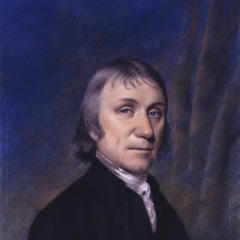
Joseph Priestley
Joseph Priestley was an English philosopher, chemist, and deist. He is known for his contributions to the study of gases, particularly for his discovery of oxygen. Priestley was an advocate of empiricism in philosophy and also made contributions to the field of education. more
You May Also Like
Source: Institutes of Natural and Revealed Religion: To which is Prefixed, an Essay on the Best Method of Communicating Religious Knowledge to the Members of Christian Societies
Source: A History of the Corruptions of Christianity
Source: A History of the Corruptions of Christianity
Source: A History of the Corruptions of Christianity
Source: An History of the Corruption of Christianity
Source: An History of the Corruption of Christianity
Source: An History of the Corruptions of Christianity
Source: Experiments and Observations on Different Kinds of Air and Other Branches of Natural Philosophy, Connected with the Subject ...: Being the Former Six Volumes Abridged and Methodized, with Many Additions
“If you have more fish on your wall than pictures, you might be a redneck.”