Quotessence
Home / Quotes / Quote by Arthur Ashe

Quote by Arthur Ashe

“You've got to make a lot of sacrifices and spend a lot of time if you really want to achieve with this sport, or in any sport, or in anything truly worthwhile.”

Quote by Arthur Ashe

Author
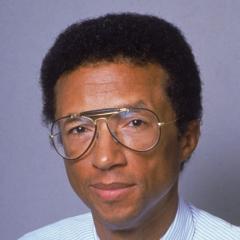
Arthur Ashe
Arthur Ashe

Arthur Ashe was an American tennis player who achieved significant success in the early 1970s. Known for his exceptional skill and tenacity, Ashe won the men's singles title at the U.S. Open in 1975, and the doubles titles at the French Open and Wimbledon in 1968. Beyond his tennis achievements, Ashe was also committed to the causes of racial equality and social justice. more

You May Also Like

“All do not develop in the same manner, or at the same pace. Nations, like men, often march to the beat of different drummers, and the precise solutions of the United States can neither be dictated nor transplanted to others. What is important is that all nations must march toward increasing freedom; toward justice for all; toward a society strong and flexible enough to meet the demands of all its own people, and a world of immense and dizzying change.”

“Each nation has different obstacles and different goals, shaped by the vagaries of history and of experience. Yet as I talk to young people around the world I am impressed not by the diversity but by the closeness of their goals, their desires and their concerns and their hope for the future.”

“Even government by the consent of the governed, as in our own Constitution, must be limited in its power to act against its people; so that there may be no interference with the right to worship, or with the security of the home; no arbitrary imposition of pains or penalties by officials high or low; no restrictions on the freedom of men to seek education or work or opportunity of any kind, so that each man may become all he is capable of becoming.”

“For there is another kind of violence, slower but just as deadly, destructive as the shot or the bomb in the night. This is the violence of institutions; indifference and inaction and slow decay. This is the violence that afflicts the poor, that poisons relations between men because their skin has different colors. This is a slow destruction of a child by hunger, and schools without books and homes without heat in the winter.”

“It is not realistic or hard-headed to solve problems and take action unguided by ultimate moral aims and values, although we all know some who claim that it is so. In my judgement, it is thoughtless folly. For it ignores the realities of human faith and of passion and of belief; forces ultimately more powerful than all the calculations of our economists or of our generals. Of course to adhere to standards, to idealism, to vision in the face of immediate dangers takes great courage and takes self-confidence. But we also know that only those who dare to fail greatly, can ever achieve greatly.”

“Like it or not, we live in interesting times. They are times of danger and uncertainty; but they are also the most creative of any time in the history of mankind. And everyone here will ultimately be judged - will ultimately judge himself - on the effort he has contributed to building a new world society and the extent to which his ideals and goals have shaped that effort.”

“Men without hope, resigned to despair and oppression, do not make revolutions. It is when expectation replaces submission, when despair is touched with the awareness of possibility, that the forces of human desire and the passion for justice are unloosed.”

“Our answer is the world's hope; it is to rely on youth. The cruelties and the obstacles of this swiftly changing planet will not yield to obsolete dogmas and outworn slogans. It cannot be moved by those who cling to a present which is already dying, who prefer the illusion of security to the excitement and danger which comes with even the most peaceful progress. This world demands the qualities of youth: not a time of life but a state of mind, a temper of the will, a quality of imagination, a predominance of courage over timidity, of the appetite for adventure over the life of ease...”