Quotessence
Home / Quotes / Quote by Maximus the Confessor

Quote by Maximus the Confessor

“Those who, animal-like, live solely according to the senses... misuse God's creation in order to indulge the passions. They do not understand the principle of that wisdom which is revealed to all: that we should know and praise God through His creation and that by means of the visible world we should understand whence we came, what we are, for what purpose we were made and where we are going. On the contrary, they travel through this present age in darkness... with... ignorance of God.”

Quote by Maximus the Confessor

Author
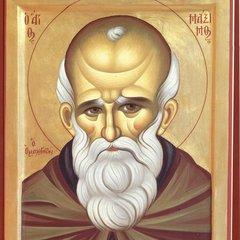
Maximus the Confessor

Maximus the Confessor, who lived from 580 to August 13, 662, was a mysterious religious philosopher and theologian. His life and achievements are not well-documented in historical records, but his thoughts have had a profound impact on Christian philosophy. more

You May Also Like

“When like the patriarchs we learn to dig wells of virtue and spiritual knowledge within ourselves by means of ascetic practice and contemplation, we will find within us Christ the spring of life (cf. Gen. 26:15-18). Wisdom commands us to drink from this spring, saying, 'Drink water from your own pitchers and from the spring of your own wells' (Prov. 5:15). If we do this we shall find that the treasures of wisdom truly are within us.”

“If you expound the teaching of the Logos from the standpoint of the moral life, using materialistic words and examples which correspond to the capacity of your hearers, you make the Logos flesh. Conversely, if you elucidate mystical theology by means of the higher forms of contemplation you make the Logos spirit.”

“When we think of the height of God's infinity we should not despair of His compassion reaching us from such a height; and when we recall the infinite depth of our fall through sin we should not refuse to believe that the virtue which has been killed in us will rise again. For God can accomplish both these things: He can come down and illumine our intellect with spiritual knowledge, and He can raise up the virtue within us and exalt it with Himself through works of righteousness.”

“He who devoutly strives to attain wisdom and is on his guard against the invisible powers, should pray that both natural discrimination - whose light is but limited - and the illuminating grace of the Spirit abide in him. The first by means of practice trains the flesh in virtue, the second illuminates the intellect so that it chooses above all else companionship with wisdom; and through wisdom it destroys the strongholds of evil and pulls down 'all the self-esteem that exalts itself against the knowledge of God' (II Cor. 10:5).”

“Blessed is he who like Joshua (cf. Josh. 10:12-13) keeps the Sun of righteousness from setting in himself throughout the whole day of his present life, not allowing it to be blotted out by the dusk of sin and ignorance. In this way he will truly be able to put to flight the cunning demons that rise up against him.”

“As long as I remain imperfect and refractory, neither obeying God by practising the commandments nor becoming perfect in spiritual knowledge, Christ from my point of view also appears imperfect and refractory because of me. For I diminish and cripple Him by not growing in spirit with Him, since I am 'the body of Christ and one of its members' (I Cor. 12:27).”

“Just as the teaching of the Law and the prophets, being harbingers of the coming advent of the Logos in the flesh, guide our souls to Christ (cf. Gal. 3:24), so the glorified incarnate Logos of God is Himself a harbinger of His spiritual advent, leading our souls forward by His own teachings to receive His divine and manifest advent. He does this ceaselessly, by means of the virtues converting those found worthy from the flesh to the spirit. And He will do it at the end of the age, making manifest what has hitherto been hidden from men.”

“Before His visible advent in the flesh the Logos of God dwelt among the patriarchs and prophets in a spiritual manner, prefiguring the mysteries of His advent. After His incarnation He is present in a similar way not only to those who are still beginners, nourishing them spiritually and leading them toward the maturity of divine perfection, but also to the perfect, secretly pre-delineating in them the features of His future advent as if in an ikon.”