“At Gabriel College there was a very holy object on the high altar of the Oratory, covered with a black velvet cloth... At the height of the invocation the Intercessor lifted the cloth to reveal in the dimness a glass dome inside which there was something too distant to see, until he pulled a string attached to a shutter above, letting a ray of sunlight through to strike the dome exactly. Then it became clear: a little thing like a weathervane, with four sails black on one side and white on the other, began to whirl around as the light struck it. It illustrated a moral lesson, the Intercessor explained, for the black of ignorance fled from the light, whereas the wisdom of white rushed to embrace it. {Alluding to William Crookes's radiometer.}”
Quote by Philip Pullman
Work
Northern Lights: Oxford
Browse quotes and source details for this work. more
Author
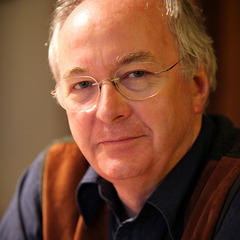
Philip Pullman
Philip Pullman is a British film writer known for his adaptations of literary works. Born in October 1946, he is a prolific writer who has adapted several renowned novels into film scripts. more
You May Also Like
Source: Adventures of the Fluffytail Mouse
“stubbornness in the face of calamity has no reward”
Source: faded yellow by the winter
Source: From Nothing
Source: Perjalanan Sang Zaman
Source: Mariam Sharma Hits the Road
Source: Unsounded - Volume 1: The Zombie & The Brat
“Desculpem o atraso, perdi uma coisa hoje..." o quê... "A dignidade." *Badumtssss*”
Source: Split: A Memoir of Divorce