Quotessence
Home / Quotes / Quote by Sarah Ferguson

Quote by Sarah Ferguson

“There are today many institutions, taken for granted as pillars of the establishment, which owe their existence, or their appearance, in part to Albert. He is regarded as the architect of the modern monarchy; and when his great-great granddaughter, Queen Elizabeth II, waves to people from Buckingham Palace, she does so standing on the balcony which was Albert’s idea.”

Quote by Sarah Ferguson

Work

Victoria and Albert: A Family Life at Osborne House

Browse quotes and source details for this work. more

Author
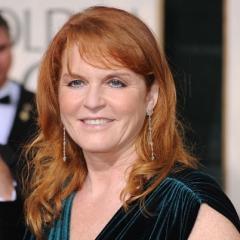
Sarah Ferguson
Sarah Ferguson

Sarah Ferguson is a British writer born on October 15, 1959. Her works span a variety of genres, including novels, biographies, and children's literature. Ferguson is known for her unique narrative style and in-depth character development. more

You May Also Like

“One of the ‘faults’, which Albert attempted to cure her of, and failed, was the Queen’s inability to live in the present. When she was happy, she fended off the future by anticipating it; and dealt with change when it came by dwelling on the past. The band under her window would wake her with a hymn – ‘Now thank we all our God’, or Psalm 100 – while Albert wished her joy so tenderly, so merrily, so lovingly, that she confessed humbly: ‘Often I feel surprised at being so loved, and tremble at my great happiness, dreading that I may be too happy.”

“The next day she (Victoria) pulled down some of her old diaries, perhaps to recall Lezhen’s part of her life, and came to a passage in 1839 where she had written of her ‘happiness’ with Melbourne. Now, with both Melbourne and Lezhen gone she noted ‘1st October, 1842. Wrote & looked over & corrected my old journals, which do not now awake very pleasant feelings. The life I led then was so artificial & superficial, & yet I thought I was happy. Thank God! I now know what real happiness means.”

“Both the Queen and Prince Albert seemed to have spent far more time with their children, than one usually associates with Victorian life. They ate together, and walked, rode, played and painted together. And the fond parents were often present at bath time and in the nurseries that Prince Albert had designed close at hand.”

“Even at Osborne, Albert had to start his day early if he was to get through the relentless agenda that he had set himself. The Queen did not have a private secretary; this role was filled by Albert, and as in every other area of their lives together – in the running of her establishments, in the upbringing of their children, in emotional support – she completely relied on him. He drafted, clarified, advised, and she approved nothing that he did not agree with. This self-imposed task of supporting, and moulding a constitutional monarch, who also made considerable emotional demands on him, would have been burden enough for most men. But for Albert, it was only part of his work, for the German prince had taken on an active role in the cultural life of his adoptive country.”

“Love addicts often pick partners who are emotionally unavailable because deep down, they don’t feel worthy of having a healthy, loving relationship. A love addict craves and obsesses about becoming enmeshed or ‘one’ with another human being at all costs, even if it means putting themselves in potential danger.”

“Mental stories can literally spoil a human life. It took me a long time to become aware of my mental commentary, such as: “Everything always goes wrong”, “I won’t be accepted”, “I’m a failure” or “What’s the point?” Those fears were deep-rooted and triggered many upsetting addictive patterns of behaviour”