Quotessence
Home / Quotes / Quote by Jean Baudrillard

Quote by Jean Baudrillard

“Such are the incalculable effects of that negative passion of indifference, that hysterical and speculative resurrection of the other. Racism, for example. Logically, it should have declined with the advance of Enlightenment and democracy. Yet the more hybrid our cultures become, and the more the theoretical and genetic bases of racism crumble away, the stronger it grows. But this is because we are dealing here with a mental object, an artificial construct, based on an erosion of the singularity of cultures and entry into the fetishistic system of difference. So long as there is otherness, strangeness and the (possibly violent) dual relation -- as we see in anthropological accounts up to the eighteenth century and into the colonial phase -- there is no racism properly so-called. Once that `natural' relation is lost, we enter into a phobic relationship with an artificial other, idealized by hatred. And because it is an ideal other, this relationship is an exponential one: nothing can stop it, since the whole trend of our culture is towards a fanatically pursued differential construction, a perpetual extrapolation of the same from the other. Autistic culture by dint of fake altruism. All forms of sexist, racist, ethnic or cultural discrimination arise out of the same profound disaffection and out of a collective mourning, a mourning for a dead otherness, set against a background of general indifference -- a logical product of our marvellous planet-wide conviviality. The same indifference can give rise to exactly opposite behaviour. Racism is desperately seeking the other in the form of an evil to be combated. The humanitarian seeks the other just as desperately in the form of victims to aid. Idealization plays for better or for worse. The scapegoat is no longer the person you hound, but the one whose lot you lament. But he is still a scapegoat. And it is still the same person.”

Quote by Jean Baudrillard

Work

The Perfect Crime

Browse quotes and source details for this work. more

Author
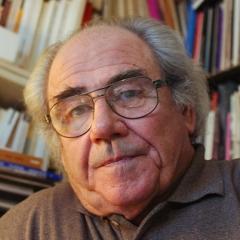
Jean Baudrillard
Jean Baudrillard

Jean Baudrillard was a French philosopher known for his critical studies on consumerism, media, and semiotics. His theories have had a profound impact on postmodernism and cultural studies. more

You May Also Like

“There are essentially two different philosophies at play in our politics: one that says, we are all in this together, let's help each other; and the other that says, I got mine, you are on your own. One is compassionate; the other is indifferent to the suffering of others.”

“All these indifferent passions, or passions born of indifference, all these negative passions, culminate in hatred. A strange expression: `I've got the hate' [J'ai la haine]. No object. It is like `I'm demonstrating', but for whom, for what? `I take responsibility' [J'assume], but for what? Nothing in particular. One perhaps takes responsibility precisely for the nothing. One demonstrates for or against the nothing -- how are we to know? This is the fate of all these intransitive verbs. The graffiti said: `I exist', `I live at this particular place'. This was stated with a kind of exultation, yet at the same time it said: `There is no meaning to my life'. Similarly, `I've got the hate' says at the same time: `This hate I have has no object'; `There's no meaning to it'. Hatred is doubtless something which does indeed outlive any definable object, and feeds on the disappearance of that object. Who are we to take against today? There, precisely, is the object: the absent other of hatred. `Having' hatred is like a sort of potential of -- negative and reactive -- energy, but energy all the same. These are, indeed, the only passions we have today: hatred, disgust, allergy, aversion, rejection and disaffection. We no longer know what we want, but we know what we don't want. In its pure expression of rejection, it is a non-negotiable, irremediable passion. Yet there is in it something like an invitation to the absent other to offer himself as an object for that hatred. The dream of hatred is to give rise to a heartfelt enmity, which is scarcely available at all in our world now, as all conflicts are immediately contained. Over against the hatred born of rivalry and conflict there is a hatred born of accumulated indifference which can suddenly crystallize in an extreme physical outburst. We are not speaking of class hatred now, which, paradoxically, remained a bourgeois passion. That had a target, and was the driving force behind historical action. This hatred is externalized only in episodes of `acting-out'. It does not give rise to historical violence, but to a virulence born of disaffection with politics and history. In this sense, it is the characteristic passion not of the end of history but of a history without end, a history which is a dead-end, since there has been no resolution of all the problems it posed. It is possible that beyond the end, in those reaches where things turn around, there is room for an indeterminate passion, where what remains of energy also turns around, like time, into a negative passion.”

“There’s nothing the dead can tell you that the living can’t,” he’d said to me. “World is indifferent to your feelings. World has no responsibility and no reasons why a serial killer can randomly create orphans and then disappear, and no antipathy for assholes who get drunk and kill, then go free a couple of years later. You gotta look for joy, not reasons and explanations.”

“The real or fancied indifference of some man or woman I love, The sickness of one of my folks or of myself, or ill-doing or loss or lack of money, or depressions or exaltations, Battles, the horrors of fratricidal war, the fever of doubtful news, the fitful events; These come to me days and nights and go from me again, But they are not the Me myself.”